
Retinoblastoma Proptosis Treatment in Mumbai & Navi Mumbai
Advanced Retinoblastoma Proptosis Care at Laxmi Eye Hospital
Retinoblastoma Proptosis is a serious condition where a child with retinoblastoma develops forward bulging of the eye because the tumour extends beyond the eyeball into surrounding tissues. It requires immediate specialist evaluation and timely treatment.
At Laxmi Eye Hospital, children with suspected Retinoblastoma Proptosis undergo comprehensive eye examinations, advanced imaging, and personalised treatment planning by experienced ophthalmologists.
Early diagnosis plays a vital role in improving treatment outcomes, protecting vision whenever possible, and reducing the risk of tumour progression.
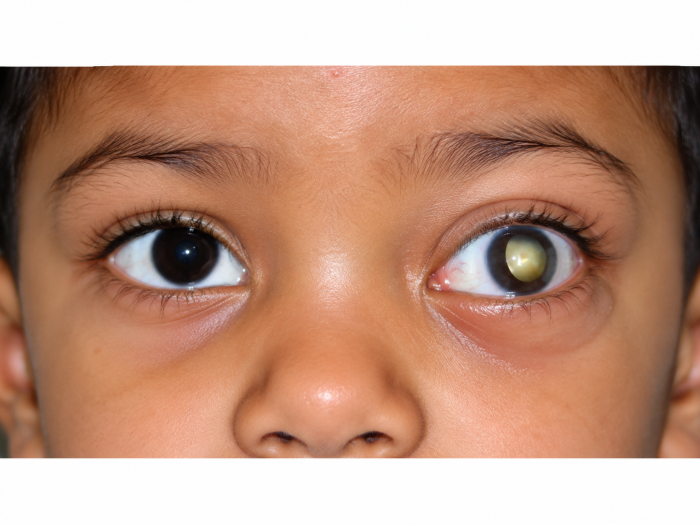
What Causes Retinoblastoma Proptosis?
Proptosis develops when retinoblastoma spreads outside the eyeball into the surrounding orbital tissues, causing the eye to bulge forward.
Common causes and risk factors include:
Advanced untreated retinoblastoma.
Delayed diagnosis of eye cancer.
Tumour spreading into orbital tissues.
Genetic forms of retinoblastoma.
Late presentation after vision-related symptoms.
Parents should seek immediate medical attention if a child's eye appears unusually prominent or swollen.
Symptoms of Retinoblastoma Proptosis
Children with Retinoblastoma Proptosis may experience several warning signs that require urgent evaluation.
Bulging of one eye.
White reflection in the pupil (Leukocoria).
Crossed eyes (Strabismus).
Eye redness and swelling.
Reduced vision.
Difficulty moving the affected eye.
Pain in advanced stages.
Early recognition of these symptoms can help ensure timely treatment and better outcomes.
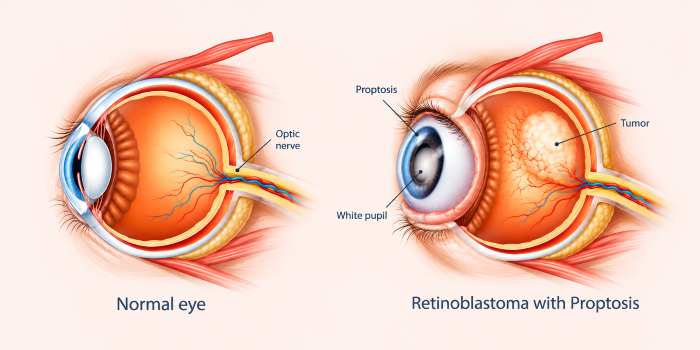
How Is Retinoblastoma Proptosis Diagnosed?
Specialists perform detailed eye examinations and advanced imaging to determine whether the tumour has spread beyond the eye.
Diagnosis may include:
Comprehensive pediatric eye examination.
Dilated retinal examination.
Ocular ultrasound.
MRI scan of the orbit and brain.
Additional investigations when required.
Accurate diagnosis helps doctors create an effective treatment plan for every child.
Treatment for Retinoblastoma Proptosis
Treatment depends on the stage of the disease, tumour size, and whether it has spread beyond the eye.
Chemotherapy
Systemic chemotherapy is commonly used to shrink the tumour and control its spread before additional treatment.
Surgery
In advanced cases, surgical removal of the affected eye (enucleation) may be recommended when the eye cannot be safely preserved.
Additional Treatments
Some children may also require:
Radiation therapy.
Targeted chemotherapy approaches.
Multidisciplinary oncology care.
Regular follow-up monitoring.
Each treatment plan is personalised based on the child's condition and overall health.
Step-by-Step Treatment Process
Treatment generally involves:
1. Emergency Eye Evaluation
Specialists assess eye protrusion and tumour involvement through detailed examination.
2. Advanced Imaging
MRI and other investigations determine the extent of tumour spread.
3. Personalised Treatment Planning
Doctors create an individual treatment strategy based on disease stage.
4. Long-Term Follow-Up
Regular monitoring helps evaluate treatment response and detect recurrence early.
Early intervention significantly improves treatment outcomes for children with retinoblastoma.
Why Early Treatment Matters
Retinoblastoma is highly treatable when diagnosed early, and prompt treatment can improve long-term outcomes.
Early treatment can help:
Improve survival outcomes.
Reduce tumour spread.
Preserve vision whenever possible.
Protect the healthy eye.
Minimise long-term complications.
Why Choose Laxmi Eye Hospital for Retinoblastoma Proptosis Care?
Laxmi Eye Hospital offers specialised pediatric eye care with advanced diagnostic facilities and personalised treatment planning.
Patients benefit from:
Experienced ophthalmologists.
Advanced eye imaging.
Child-focused eye examinations.
Comprehensive treatment planning.
Long-term follow-up care.
With centres across Panvel, Kharghar, Kamothe, Dombivli, Wakad, and Hinjewadi, specialised eye care is available closer to your location.
Consult Laxmi Eye Hospital for Retinoblastoma Proptosis
If your child develops a bulging eye, white pupil reflex, crossed eyes, or other unusual eye symptoms, seek immediate specialist evaluation.
Book Your Consultation TodayFrequently Asked Questions About Retinoblastoma Proptosis
-
Q1.
What is Retinoblastoma Proptosis?
It is a condition where a child with retinoblastoma develops forward bulging of the eye due to tumour extension beyond the eyeball.
-
Q2.
Is Retinoblastoma Proptosis an emergency?
Yes. It requires immediate evaluation because it may indicate advanced eye cancer.
-
Q3.
Can Retinoblastoma be treated successfully?
Many children have successful outcomes when retinoblastoma is diagnosed and treated early.
-
Q4.
What is the first sign of retinoblastoma?
A white reflection in the pupil (Leukocoria) is one of the most common early warning signs.
-
Q5.
Which children are at higher risk?
Children under five years of age, especially those with a family history of retinoblastoma, may have a higher risk.
At Laxmi, the most trusted Eye hospital, we have a heritage of quality eye care spanning 3 decades and over 25 lakh satisfied patients. Our doctors are highly qualified and experienced super specialists, with most of them being fellowship-trained at eminent national and global institutions.
 Call
Call
All Copyright© Reserved @ Laxmi Eye Hospital And Institute