
Pterygium Surgery in Mumbai & Navi Mumbai
Advance Pterygium Surgery at Laxmi Eye Hospital
Pterygium is a triangular-shaped tissue growth that develops on the white part of the eye (conjunctiva) and gradually extends towards the cornea. In the early stages, it may cause redness, dryness, and irritation. As it progresses, it can affect the corneal surface and lead to blurred vision or changes in eye shape.
At Laxmi Eye Hospital, patients with pterygium are evaluated using detailed eye examinations to understand the size, progression, and impact of the growth. Based on the condition, our eye specialists recommend suitable treatment options, including advanced surgical techniques when required.
People living in areas with increased exposure to sunlight, coastal environments, dust, and wind — common factors in cities like Mumbai and Navi Mumbai — may have a higher risk of developing or worsening pterygium.
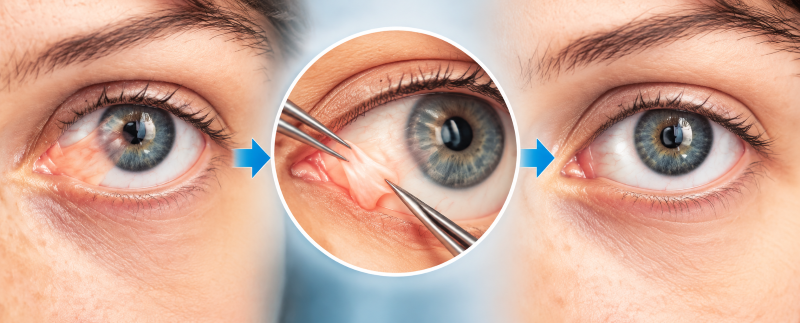
What Causes Pterygium?
Pterygium is commonly associated with long-term exposure to ultraviolet (UV) rays. Continuous irritation from environmental factors may contribute to abnormal tissue growth on the eye surface.
Common risk factors include:
Frequent exposure to sunlight without eye protection.
Outdoor work involving dust and wind exposure.
Dry eye conditions causing repeated irritation.
Living in areas with high UV exposure.
Long-term environmental eye irritation.
Wearing UV-protective sunglasses and using appropriate eye care measures can help reduce irritation and protect the eye surface.
Symptoms of Pterygium
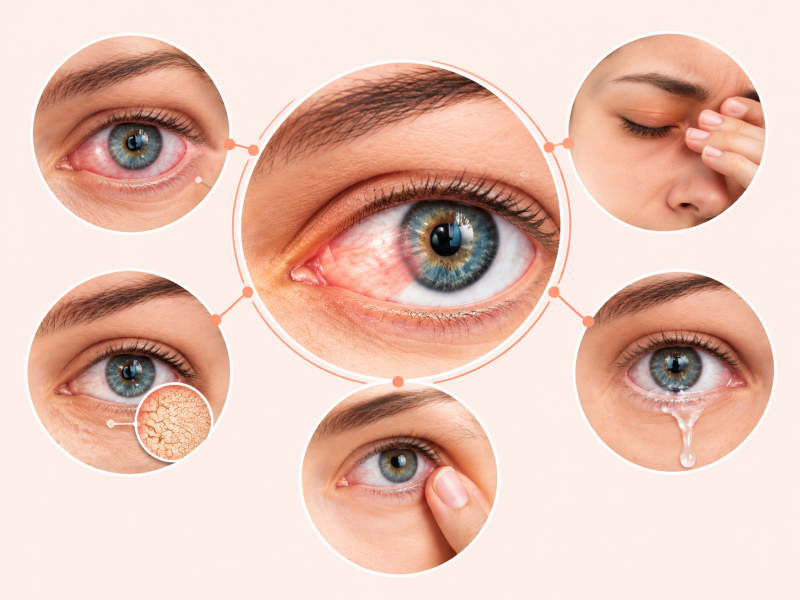
A small pterygium may not cause noticeable symptoms initially. However, as the growth increases, patients may experience:
Persistent eye redness.
Burning or irritation.
Dryness and discomfort.
Foreign body sensation (feeling of something in the eye).
Excess watering.
Blurred or disturbed vision.
Visible tissue growth affecting eye appearance.
If the growth reaches the central cornea, it can interfere with normal vision and may require surgical evaluation.
When Is Pterygium Surgery Required?
Not every pterygium requires immediate surgery. Small and stable growths may be monitored with regular eye check-ups.
An ophthalmologist may recommend surgery when:
The growth starts affecting vision.
The pterygium is gradually increasing in size.
Persistent irritation does not improve with medicines or lubricating drops.
The growth approaches the centre of the cornea.
The patient has significant cosmetic concerns.
Early evaluation helps determine the right time for intervention and prevents unnecessary progression.
Advanced Sutureless Pterygium Removal Surgery
Modern treatment focuses on removing the abnormal tissue while reducing the chances of recurrence.
At Laxmi Eye Hospital, Pterygium Removal Surgery may involve:
Pterygium Excision with Conjunctival Autograft
During this procedure, the abnormal tissue is carefully removed, and a healthy thin layer of conjunctival tissue is placed over the treated area.
The graft is usually taken from a protected area of the patient's own eye and helps restore the natural surface of the eye.
Fibrin Glue Technique
In selected cases, fibrin tissue glue may be used instead of traditional stitches to secure the graft.
Advantages may include:
Reduced post-operative discomfort.
Less irritation caused by sutures.
Faster surface healing.
Better patient comfort during recovery.
Traditional techniques without graft placement may have higher chances of recurrence. Modern graft-based approaches are preferred because they provide better surface healing and help minimise regrowth risk.
Step-by-Step Pterygium Surgery Procedure
The procedure generally involves:
1. Detailed Eye Evaluation
The ophthalmologist examines the pterygium size, corneal involvement, and overall eye health before planning treatment.
2. Tissue Removal
The abnormal growth is carefully removed using microsurgical techniques.
3. Graft Placement
A conjunctival autograft is positioned over the affected area to support healing.
4. Post-Surgery Medication
Eye drops and follow-up visits are advised to support recovery and maintain eye health.
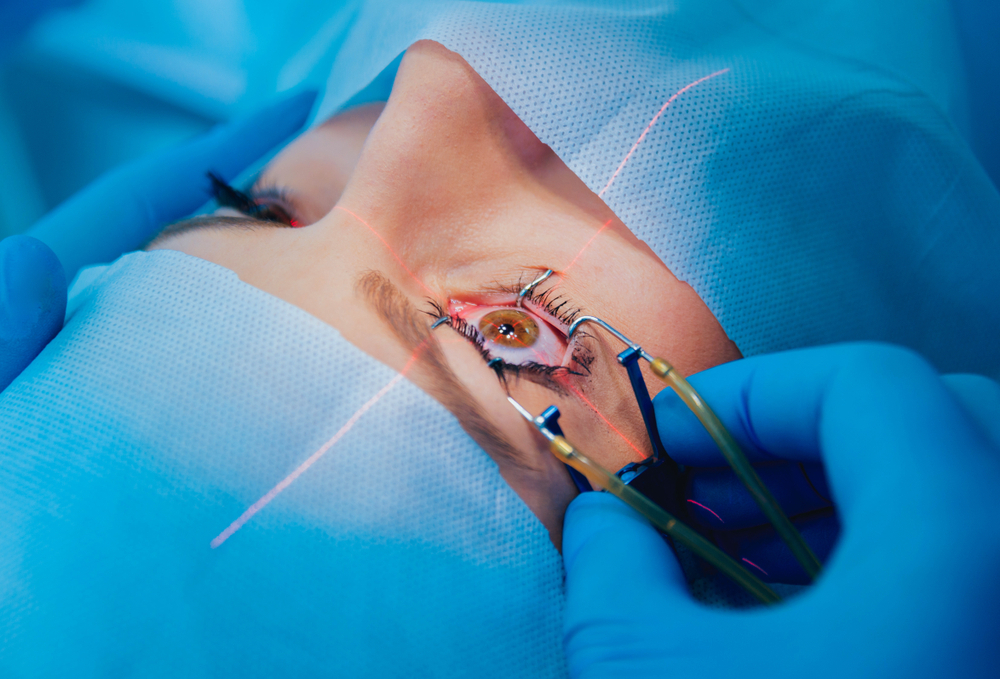
The procedure is usually performed as a day-care surgery under local anaesthesia, allowing patients to return home the same day.
Pterygium Surgery Cost in Mumbai
The Cost of Pterygium Surgery in Mumbai depends on several factors, including:
Size and severity of the pterygium.
Surgical technique selected.
Requirement of grafting or specialised methods.
Pre-operative eye investigations.
Medicines and follow-up care.
A consultation with an eye specialist helps determine the suitable treatment approach and expected expenses based on individual requirements.
Why Choose Laxmi Eye Hospital for Pterygium Treatment?
Laxmi Eye Hospital provides specialised eye care with a focus on accurate diagnosis, advanced surgical methods, and personalised treatment planning.
Patients benefit from:
Experienced ophthalmologists.
Advanced diagnostic facilities.
Modern microsurgical techniques.
Comprehensive pre-operative evaluation.
Follow-up support throughout recovery.
With centres across Mumbai and Navi Mumbai locations including Panvel, Kharghar, Kamothe, Dombivli, Wakad, and Hinjewadi, patients can access specialised eye care closer to their location.
Consult Laxmi Eye Hospital for Advanced Pterygium Surgery
If you notice persistent eye redness, irritation, or tissue growth on the eye surface, consult an experienced eye specialist for timely evaluation and personalised treatment guidance.
Book Your Consultation TodayFrequently Asked Questions About Pterygium Surgery
-
Q1. What is pterygium surgery?
Pterygium surgery is a procedure performed to remove abnormal tissue growth from the eye surface when it affects vision, comfort, or appearance.
-
Q2. Is pterygium surgery painful?
The procedure is performed under anaesthesia, so patients generally do not feel pain during surgery. Mild irritation, watering, or scratchiness may occur during the initial recovery period.
-
Q3. How long does it take to recover after surgery?
Many patients can resume routine activities within a few days, but complete surface healing may take several weeks depending on individual recovery.
-
Q4. Does pterygium grow back after surgery?
Recurrence is possible, but modern techniques such as conjunctival autografting help reduce the chances compared with older removal methods.
-
Q5. Is pterygium surgery safe?
When performed by an experienced ophthalmologist using appropriate techniques, it is considered a safe procedure for suitable patients.
At Laxmi, the most trusted Eye hospital, we have a heritage of quality eye care spanning 3 decades and over 25 lakh satisfied patients. Our doctors are highly qualified and experienced super specialists, with most of them being fellowship-trained at eminent national and global institutions.
 Call
Call
All Copyright© Reserved @ Laxmi Eye Hospital And Institute