
Paediatric Eye Specialist and Myopia Control in Kharghar
Children’s eyes continue to develop during the growing years, making regular eye examinations important for detecting and managing vision problems at the right time.
Conditions such as refractive errors, squint, lazy eye (amblyopia), and increasing myopia (short-sightedness) can affect a child’s learning, daily activities, and overall visual development if not identified early.
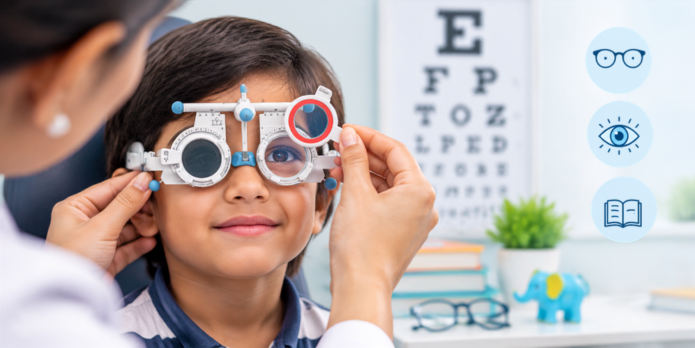
Paediatric Eye Specialist and Myopia Control in Kharghar at Laxmi Eye Institute & Hospitals provides specialised eye care for children, including comprehensive eye evaluations, diagnosis of childhood eye conditions, and personalised myopia management plans.
What is Paediatric Eye Care?
Paediatric eye care focuses on the diagnosis, treatment, and prevention of eye conditions affecting infants, children, and teenagers.
A paediatric eye specialist evaluates how a child’s eyes are developing and identifies problems that may affect vision.
Regular eye check-ups help detect:
Vision problems
Eye alignment issues
Lazy eye (amblyopia)
Childhood cataract
Refractive errors
Myopia progression
Eye movement disorders
Early diagnosis and timely management can help support healthy visual development.
What is Myopia (Short-Sightedness)?
Myopia is a common vision condition in which distant objects appear blurry while nearby objects can usually be seen clearly.
It occurs when the eye grows longer than normal or when the shape of the eye causes light to focus in front of the retina instead of directly on it.
Myopia often develops during childhood and may increase as the child grows.
Symptoms of Myopia in Children
Parents should watch for signs such as:
Difficulty seeing distant objects clearly
Sitting very close to the television or screen
Holding books or devices close to the face
Frequent eye rubbing
Squinting while looking at distant objects
Complaints of headaches or eye strain
Difficulty seeing the classroom board
Reduced interest in outdoor activities
What is Myopia Control?
Myopia control refers to treatments and strategies designed to slow down the progression of short-sightedness in children.
The goal of myopia control is not only to improve vision with glasses or lenses but also to reduce the risk of developing high myopia and related eye complications later in life.
Myopia Control Treatment Options in Kharghar
Treatment is selected based on the child’s age, eye growth, myopia progression, and individual needs.
Myopia Control Glasses
Specially designed spectacle lenses may help slow the progression of myopia while providing clear vision.
Myopia Control Contact Lenses
Certain specialised contact lenses may be recommended for eligible children after detailed evaluation.
Orthokeratology (Ortho-K) Lenses
These specially designed lenses are worn during sleep and temporarily reshape the cornea to provide clear vision during the day while helping manage myopia progression in selected cases.
Low-Dose Atropine Eye Drops
Low-dose atropine may be prescribed for some children to help slow myopia progression under specialist guidance.
Lifestyle Modification
Healthy visual habits play an important role in myopia management. Recommendations may include:
Spending more time outdoors
Taking regular breaks during screen use
Maintaining proper reading distance
Following healthy screen habits
Common Eye Conditions Treated by Paediatric Eye Specialist
Lazy Eye (Amblyopia)
Lazy eye occurs when one eye develops weaker vision due to reduced visual stimulation during childhood. Early treatment can improve visual development.
Squint (Strabismus)
Squint occurs when both eyes do not align properly. Treatment may include glasses, patching, exercises, or surgery depending on the condition.
Refractive Errors
Children may develop Myopia (short-sightedness), Hypermetropia (long-sightedness), or Astigmatism. Correct diagnosis helps provide appropriate vision correction.
Childhood Eye Infections and Allergies
Paediatric eye specialists also evaluate common eye infections, irritation, and allergic eye conditions in children.
Paediatric Eye Examination in Kharghar
A child’s eye examination may include:
Vision Testing – Checks how clearly the child can see.
Refraction Assessment – Determines the need for glasses and measures eye power.
Eye Alignment Evaluation – Checks for squint or eye coordination problems.
Eye Movement Assessment – Evaluates eye muscle function.
Dilated Eye Examination – Allows detailed assessment of the internal structures of the eye.
Myopia Assessment – Helps monitor changes in eye growth and myopia progression.
Importance of Regular Eye Check-ups for Children
Regular eye examinations help:
Detect vision problems early
Support healthy eye development
Prevent complications from untreated eye conditions
Monitor changes in eye power
Manage progressive myopia effectively
Children should undergo eye evaluation especially if they have difficulty seeing, learning challenges, family history of myopia, or noticeable eye changes.
Tips to Protect Children’s Eye Health
Parents can support healthy vision by:
Encouraging outdoor activities
Limiting unnecessary screen time
Ensuring proper lighting while reading
Maintaining a healthy viewing distance from screens
Encouraging regular eye breaks
Scheduling routine eye examinations
Who Should Visit a Paediatric Eye Specialist?
A consultation is recommended for children with:
Increasing spectacle power
Difficulty seeing the board at school
Squinting or abnormal eye position
Frequent headaches during visual activities
Family history of high myopia
Poor academic performance related to vision difficulties
Complaints of blurred vision
Paediatric Eye Care & Myopia Control Cost in Kharghar
The cost of paediatric eye consultation and myopia control treatment in Kharghar depends on:
- Type of eye condition
- Diagnostic tests required
- Treatment option selected
- Type of glasses or lenses prescribed
- Follow-up requirements
A consultation with a Paediatric Eye Specialist at Laxmi Eye Institute & Hospitals helps determine the appropriate treatment plan and expected expenses.
Protect Your Child’s Vision With Expert Eye Care in Kharghar
Early detection and timely management can help children maintain healthy vision during their growing years. Consult a paediatric eye specialist at Laxmi Eye Institute & Hospitals for comprehensive evaluation and personalised myopia control solutions.
Why Choose Laxmi Eye Institute & Hospitals?
Experienced Eye Specialists – Provides specialised eye care for children and adolescents.
Comprehensive Paediatric Eye Evaluation – Detailed assessment of vision, eye alignment, and eye health.
Advanced Diagnostic Facilities – Supports accurate diagnosis and monitoring.
Personalised Myopia Control Plans – Treatment approaches tailored according to each child’s eye condition.
Complete Eye Care Services – Consultation, treatment, and follow-up care available under one roof.
FAQs About Paediatric Eye Specialist & Myopia Control in Kharghar
-
Q1. What does a paediatric eye specialist treat?
A paediatric eye specialist diagnoses and manages eye conditions in children, including refractive errors, squint, lazy eye, and myopia progression.
-
Q2. At what age should a child have an eye examination?
Children can benefit from eye examinations during early childhood, especially if there are concerns about vision, eye alignment, or family history of eye problems.
-
Q3. Can myopia in children be controlled?
Yes, myopia progression can often be slowed with appropriate management strategies recommended after evaluation by an eye specialist.
-
Q4. How much screen time is safe for children’s eyes?
Long periods of screen use can contribute to eye strain. Regular breaks and healthy screen habits are recommended.
-
Q5. Does myopia go away as children grow?
Myopia usually does not disappear naturally, but appropriate management can help control its progression.
-
Q6. Are myopia control treatments safe for children?
Myopia control options are selected based on the child’s eye condition and are prescribed after specialist evaluation.
-
Q7. How often should children get their eyes checked?
The frequency depends on the child’s age, vision status, and risk factors. Children with myopia may require regular monitoring as advised by their eye specialist.
At Laxmi, the most trusted Eye hospital, we have a heritage of quality eye care spanning 3 decades and over 25 lakh satisfied patients. Our doctors are highly qualified and experienced super specialists, with most of them being fellowship-trained at eminent national and global institutions.
 Call
Call
All Copyright© Reserved @ Laxmi Eye Hospital And Institute