
Advanced Common Eye Diseases Treatment in Dombivli, Mumbai
Eye problems can affect people of all ages and may impact daily activities like reading, working, driving, and recognising objects clearly. Early diagnosis and timely treatment help protect vision and maintain long-term eye health.
Common Eye Diseases Treatment in Dombivli at Laxmi Eye Institute & Hospitals focuses on accurate diagnosis, advanced evaluation, and personalised treatment plans for various eye conditions.
With modern diagnostic technology and experienced eye specialists, patients receive comprehensive care for different vision-related concerns under one roof.
What are Common Eye Diseases?
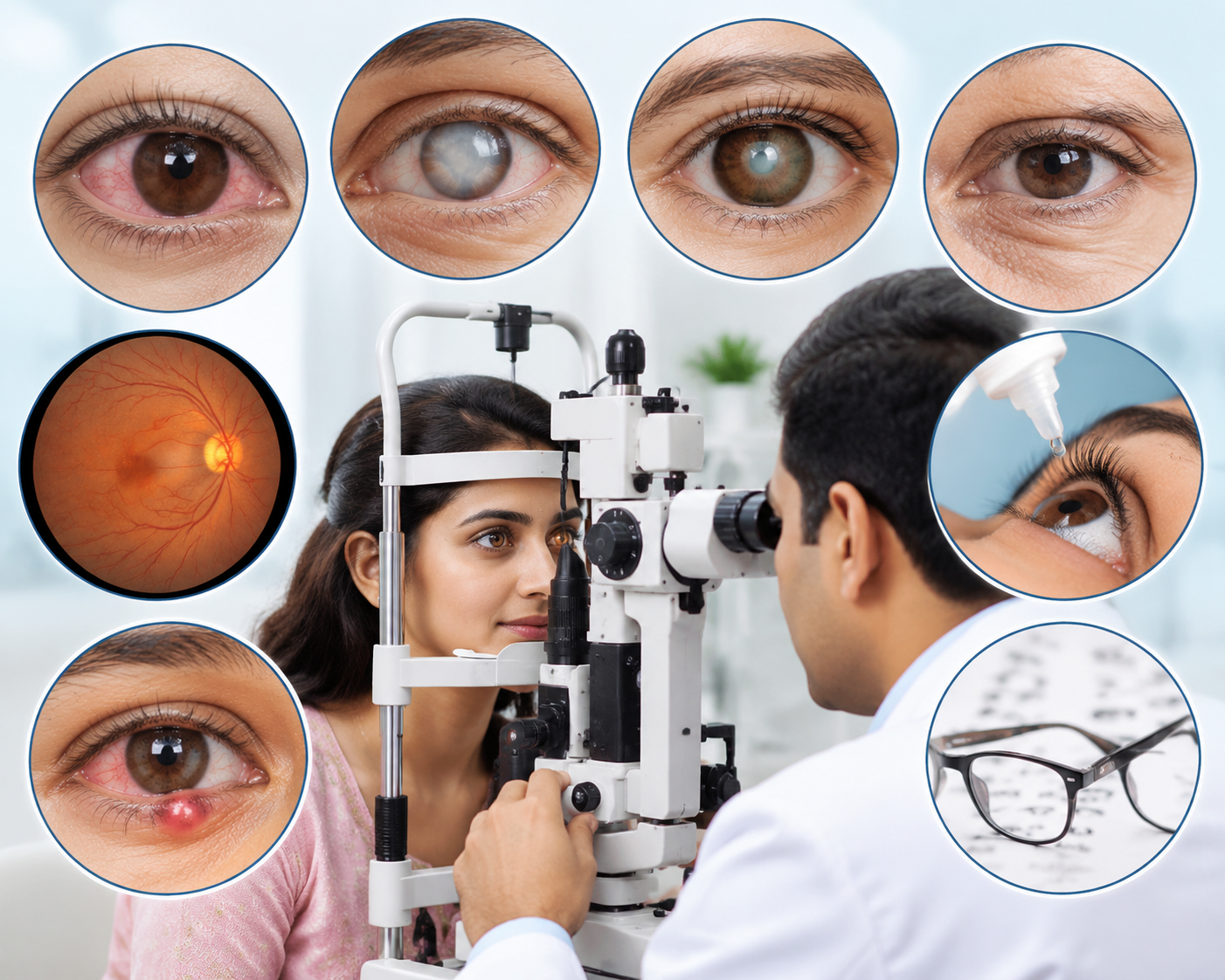
Common Eye Diseases in Dombivli refer to various conditions that affect different parts of the eye, including the cornea, lens, retina, optic nerve, and surrounding structures.
Some eye diseases may develop gradually without noticeable symptoms, while others can cause sudden vision changes requiring immediate attention.
Common eye conditions include:
- Cataract – Clouding of the natural lens of the eye causing blurred vision.
- Glaucoma – Damage to the optic nerve often associated with increased eye pressure.
- Diabetic Retinopathy – Retinal damage caused by long-term diabetes.
- Dry Eye Disease – Reduced or poor-quality tears causing irritation and discomfort.
- Refractive Errors – Vision problems like myopia, hypermetropia, and astigmatism.
- Retinal Disorders – Conditions affecting the light-sensitive layer at the back of the eye.
Symptoms of Common Eye Diseases
Many eye conditions may progress slowly, making regular eye check-ups important for early detection.
Common symptoms include:
- Blurred Vision – Difficulty seeing objects clearly.
- Eye Strain – Discomfort after reading or using digital screens.
- Eye Redness – Irritation or inflammation affecting eye comfort.
- Floaters and Flashes – Spots or light flashes in the field of vision.
- Difficulty Seeing at Night – Reduced vision in low-light conditions.
- Sudden Vision Changes – Requires immediate eye evaluation.
- Eye Pain or Headache – May indicate underlying eye problems.
Types of Common Eye Problems
Cataract
- Lens Clouding – The natural lens becomes cloudy over time.
- Reduced Vision Clarity – Causes blurry or faded vision.
- Difficulty with Daily Activities – Reading and driving may become challenging.
Glaucoma
- Optic Nerve Damage – Can affect vision permanently if untreated.
- Increased Eye Pressure – Pressure changes may damage the optic nerve.
- Peripheral Vision Loss – Side vision may gradually reduce.
Dry Eye Disease
- Reduced Tear Production – Eyes may not produce enough moisture.
- Burning Sensation – Causes irritation and discomfort.
- Watery Eyes – Excess watering can occur due to eye surface irritation.
Retina Problems
- Retinal Changes – Conditions may affect the light-sensitive layer.
- Vision Distortion – Straight lines may appear bent or unclear.
- Reduced Central Vision – Detailed vision can be affected.
Corneal Abrasion
- Superficial Injury – A scratch or injury on the surface layer of the cornea.
- Pain & Sensitivity – Causes sharp eye pain, tearing, redness, and sensitivity to light.
- Foreign Body Sensation – Feels like something is stuck inside the eye.
Keratoconus
- Corneal Thinning – The cornea thins and gradually bulges outward into a cone shape.
- Distorted Vision – Causes blurred vision and increased sensitivity to light and glare.
- Frequent Power Changes – Leads to frequent changes in spectacle prescription.
Corneal Ulcer
- Open Sore on Cornea – An infection leading to an open ulcer on the corneal surface.
- Severe Discomfort – Causes severe eye pain, redness, discharge, and reduced vision clarity.
- Visible White Spot – A white or grey spot may be visible on the cornea.
Pterygium (Surfer's Eye)
- Tissue Growth – A non-cancerous growth of fleshy tissue on the conjunctiva over the cornea.
- Surface Irritation – Causes eye redness, itching, burning sensation, and dry eyes.
- Visual Distortion – Can affect vision if the growth advances toward the center of the cornea.
Fuchs' Dystrophy
- Fluid Accumulation – Progressive breakdown of corneal cells causing fluid buildup.
- Morning Blurry Vision – Vision is noticeably blurrier upon waking up in the morning.
- Glare & Halos – Causes sensitivity to bright light and halos around light sources.
Corneal Edema
- Corneal Swelling – Fluid accumulation within the corneal layers leading to swelling.
- Blurred Vision – Causes haze, foggy vision, and eye discomfort.
- Light Sensitivity – Increased sensitivity to bright light and seeing halos around lights.
Herpes Simplex Keratitis
- Viral Infection – Recurrent viral infection affecting the corneal surface and deeper layers.
- Inflammation & Tearing – Causes eye redness, watery discharge, light sensitivity, and pain.
- Risk to Vision – Requires timely antiviral treatment to prevent scarring.
Corneal Neovascularization
- Abnormal Vessel Growth – New blood vessels grow into the normally clear cornea.
- Oxygen Deprivation – Often caused by contact lens overwear or chronic inflammation.
- Reduced Vision – Can impair corneal transparency and clear vision.
Contact Lens Overwear Syndrome
- Corneal Irritation – Discomfort and hypoxia resulting from prolonged contact lens wear.
- Redness & Dryness – Causes severe eye redness, discomfort, and light sensitivity.
- Infection Risk – Increases vulnerability to corneal abrasions and serious infections.
Eye Examination Process & Advanced Technology
A detailed eye examination helps identify the cause of vision problems and guides suitable treatment.
| Visual Acuity Test | Checks the clarity and sharpness of vision. |
|---|---|
| Eye Pressure Test | Measures pressure inside the eye to evaluate glaucoma risk. |
| Slit Lamp Examination | Evaluates the front and internal structures of the eye. |
| Retinal Examination | Checks retinal health and detects abnormalities. |
| OCT Scan | Provides detailed images of retinal layers. |
| Optical Coherence Tomography (OCT) | Helps evaluate detailed retinal and optic nerve changes. |
|---|---|
| Digital Fundus Camera | Captures high-resolution retinal images. |
| Corneal Topography | Maps the shape and structure of the cornea. |
| Advanced Imaging Systems | Support accurate diagnosis and treatment planning. |
Common Eye Diseases Treatment Options in Dombivli
Treatment depends on the type of eye condition, severity, and overall eye health.
Medical Management
Eye Drops and Medicines – Used for conditions like glaucoma, dry eye, and infections.
Lifestyle Modifications – Helps maintain better eye health.
Surgical Treatment
Cataract Surgery – Removes the cloudy lens and restores clear vision.
Laser Procedures – Used for selected retinal and glaucoma conditions.
Retinal Procedures – Helps manage complex retinal problems.
Vision Correction Treatment
Spectacles and Contact Lenses – Correct refractive errors.
Advanced Vision Correction Procedures – Suitable options are planned after evaluation.
Benefits of Early Common Eye Disease Treatment
Early evaluation and treatment can help maintain healthy vision.
- Early Detection – Identifies eye problems before they progress.
- Vision Protection – Helps reduce the risk of permanent vision loss.
- Personalised Treatment – Care plans are based on individual eye conditions.
- Better Monitoring – Regular follow-ups help track eye health.
- Improved Quality of Life – Supports comfortable daily activities.
Who Should Consider Eye Evaluation?
Regular eye check-ups are recommended for:
People Experiencing Vision Changes – Helps identify the underlying cause.
Individuals Above 40 Years – Eye disease risk may increase with age.
Diabetes Patients – Regular screening helps monitor retinal health.
People with Family History of Eye Diseases – Higher risk conditions need evaluation.
Patients with Eye Pain or Sudden Symptoms – Require timely assessment.
Common Eye Diseases Treatment Cost in Dombivli
The cost of Common Eye Diseases Treatment in Dombivli depends on the type of eye condition, required investigations, and treatment approach.
Factors affecting the cost include:
- Type of Eye Disease
- Diagnostic Tests Required
- Treatment Method
- Surgical or Non-Surgical Approach
- Follow-up Requirements
A detailed consultation at Laxmi Eye Institute & Hospitals helps determine the suitable treatment plan and expected expenses.
Protect Your Vision with Common Eye Diseases Treatment in Dombivli
Eye problems should not be ignored, as early diagnosis can help protect vision and prevent complications. Book your consultation at Laxmi Eye Institute & Hospitals for complete Common Eye Diseases Treatment in Dombivli with advanced eye care support.
Why Choose Laxmi Eye Institute & Hospitals?
Experienced Eye Specialists: Skilled ophthalmologists provide comprehensive eye care.
Advanced Diagnostic Technology: Modern equipment supports accurate diagnosis.
Personalised Treatment Approach: Treatment plans are created according to individual needs.
Complete Eye Care Services: Diagnosis, treatment, and follow-up care available under one roof.
Frequently Asked Questions About Common Eye Diseases Treatment in Dombivli
-
Q1. What are common eye diseases?
Common eye diseases include cataract, glaucoma, diabetic retinopathy, dry eye disease, and retinal disorders that can affect vision.
-
Q2. When should I visit an eye specialist?
You should consult an eye specialist if you experience blurred vision, eye pain, sudden vision changes, or difficulty seeing clearly.
-
Q3. Can common eye diseases be treated?
Yes. Treatment depends on the type and severity of the eye condition. Options may include medicines, procedures, or surgery.
-
Q4. What tests are done during an eye examination?
Eye evaluation may include vision testing, eye pressure measurement, retinal examination, and advanced imaging tests like OCT.
-
Q5. How often should I get an eye check-up?
Regular eye examinations are recommended based on age, health conditions, and individual eye risk factors.
At Laxmi, the most trusted Eye hospital, we have a heritage of quality eye care spanning 3 decades and over 25 lakh satisfied patients. Our doctors are highly qualified and experienced super specialists, with most of them being fellowship-trained at eminent national and global institutions.
 Call
Call
All Copyright© Reserved @ Laxmi Eye Hospital And Institute