Myopia Increasing Globally
Is your child sitting closer to the television, squinting to read the classroom board, or complaining about blurry vision? These signs may indicate Myopia in Children, one of the fastest-growing eye conditions affecting children and adults worldwide.
Myopia causes distant objects to appear unclear while nearby objects remain sharp. With increasing screen use, reduced outdoor activity, and changing lifestyles, more people are being diagnosed with nearsightedness at an early age.
Understanding why myopia develops, how it progresses, and what treatment options are available can help you protect your vision and make timely decisions for your eye health.
What Is Myopia?
Myopia is a common refractive error where the eye focuses light in front of the retina instead of directly on it. This usually happens because the eyeball becomes longer than normal or the cornea has excessive curvature.
The result?
Objects at a distance appear blurred.
A child with myopia may struggle to see the blackboard at school, while an adult may find difficulty driving, especially at night.
Myopia does not mean your eyes are unhealthy, but progressive myopia can increase the risk of eye problems later in life, including retinal complications, glaucoma, and myopic macular changes.
Why Is Myopia Increasing Globally?
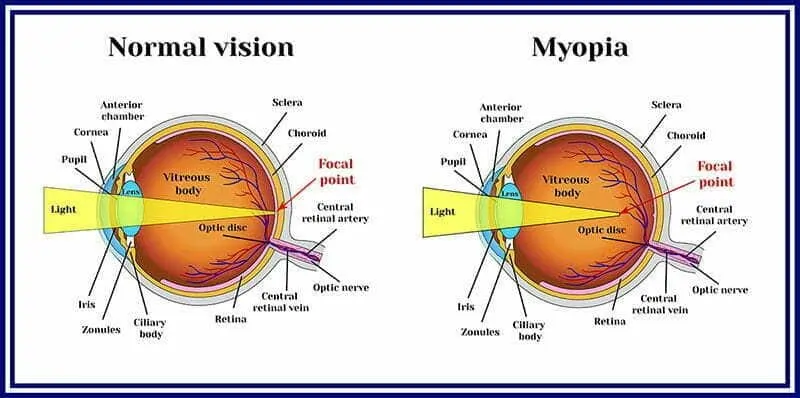
The rise of myopia has become a major concern among eye care professionals. According to global projections, nearly half of the world’s population may have myopia by 2050.
Several lifestyle changes are contributing to this increase:
1. Increased Screen Exposure
Children today spend more time on smartphones, tablets, and computers. Extended periods of near work can place continuous stress on the eyes.
2. Reduced Outdoor Time
Natural outdoor light plays an important role in healthy eye development. Studies suggest that children who spend more time outdoors may have a lower risk of developing myopia.
3. Academic Pressure and Near Work
Reading, writing, studying, and digital learning for long hours without breaks may contribute to myopia progression.
4. Genetic Factors
Children with one or both parents having myopia have a higher chance of developing the condition.
Parents often ask:
“Can lifestyle changes stop myopia completely?”
Lifestyle changes cannot remove genetic risk, but healthy eye habits can help slow progression, especially in children.
Signs and Symptoms of Myopia You Should Not Ignore
Myopia can develop slowly, and children may not always understand that their vision is unclear.
Common symptoms include:
- Sitting very close to screens or televisions
- Squinting to see distant objects
- Difficulty reading classroom boards
- Frequent headaches after studying
- Eye strain during prolonged visual activities
- Holding books or devices very close
- Difficulty seeing road signs while driving
If your child avoids outdoor activities, struggles in school, or frequently rubs their eyes, an eye examination can help identify whether vision correction is needed.
Regular screening by an experienced Ophthalmologist in Mumbai can help detect myopia early and prevent unnecessary progression.
How Is Myopia Diagnosed?
A detailed eye examination is the first step toward understanding your vision needs.
During an eye check-up, your eye specialist may perform:
Visual Acuity Testing
This measures how clearly you can see objects at different distances.
Refraction Assessment
This determines your exact spectacle power and identifies the degree of myopia.
Eye Health Evaluation
The doctor examines the retina, optic nerve, and overall eye structure to check for complications.
For children, regular eye examinations are especially important because they may not realize that their vision is affected.
Early diagnosis allows parents to explore suitable options for myopia control before the condition becomes severe.
Advanced Myopia Treatment and Control Options
The right treatment depends on your age, eye health, degree of myopia, and whether your vision is still changing.
1. Prescription Glasses
Glasses remain one of the most common methods to correct myopia. Modern lens technology also includes special myopia control lenses designed to slow progression in children.
2. Contact Lenses
Contact lenses can provide clear vision without glasses. Some specially designed lenses may also help manage myopia progression under professional guidance.
3. Orthokeratology (Ortho-K)
Ortho-K involves wearing specially designed rigid contact lenses overnight. These lenses gently reshape the cornea temporarily, allowing clearer vision during the day.
For selected children, Ortho-K may help reduce the rate at which myopia progresses.
4. Atropine Eye Drops for Myopia Control
Low-dose atropine eye drops are used in some children to slow myopia progression.
Doctors may prescribe concentrations such as:
- 0.01% atropine
- 0.025% atropine
- 0.05% atropine
The appropriate concentration depends on the child’s age, progression rate, and response to treatment.
Parents should never start atropine treatment without an eye specialist’s recommendation.
5. LASIK and SMILE for Adults
Adults with stable eye power may consider refractive surgeries such as LASIK or SMILE.
LASIK reshapes the cornea using a laser to correct vision.
SMILE uses a minimally invasive laser technique that creates a small corneal incision and removes a tiny tissue layer to correct myopia.
Recovery time and suitability depend on individual eye conditions. A detailed evaluation is necessary before choosing any procedure.
Choosing the Right Myopia Treatment in Mumbai
Finding the right treatment requires more than simply getting stronger glasses.
A comprehensive eye evaluation helps determine:
- Whether your myopia is stable or progressing
- The risk of future complications
- The most suitable vision correction method
- Whether myopia control treatment is required
At Laxmi Eye Hospital, patients receive evaluation and guidance for different vision conditions, including childhood myopia management and advanced refractive procedures.
A personalized approach helps children maintain better eye health and allows adults to explore suitable vision correction options.
How Can You Slow Myopia Progression Naturally?
You can support healthy vision habits by following simple steps:
Encourage Outdoor Activities
Children should spend regular time outdoors during daylight hours.
Follow the 20-20-20 Rule
During screen use, look at something 20 feet away for 20 seconds after every 20 minutes.
Maintain Proper Reading Distance
Keep books and screens at a comfortable distance to reduce unnecessary eye strain.
Schedule Regular Eye Exams
Monitoring changes in eye power helps doctors decide when treatment adjustments are needed.
Frequently Asked Questions About Myopia
1. What is the main cause of myopia?
Myopia occurs when the eye shape causes light to focus incorrectly on the retina. Genetics, screen habits, and limited outdoor exposure can influence its development.
2. Can myopia be cured permanently?
Myopia cannot currently be reversed naturally. Glasses, contact lenses, myopia control treatments, and refractive surgeries can correct vision or manage progression.
3. Is myopia common in children?
Yes. Myopia often begins during childhood, especially between school-age years and adolescence. Early detection helps prevent severe progression.
4. Does using mobile phones cause myopia?
Mobile phones are not the only cause of myopia. Long periods of near work combined with limited outdoor activity may increase the risk.
5. What is the best age for myopia treatment?
There is no single best age. Treatment depends on when myopia develops, how quickly it progresses, and the child’s eye health.
Conclusion
Myopia is becoming a significant vision concern among children and adults, but early detection and appropriate management can make a major difference. From myopia control options for children to advanced vision correction procedures for adults, modern eye care provides multiple solutions based on individual needs.
If you notice changes in your or your child’s vision, consult an experienced eye specialist for a detailed evaluation. Choosing timely care from a trusted eye care centre can help protect your eyesight and support long-term visual health.
For expert guidance and personalized Myopia treatment in Mumbai, consult specialists at Laxmi Eye clinic for comprehensive eye evaluation and treatment options.