Myopia Control for Kids
As a parent, ensuring your child’s vision is healthy and well-protected is one of your top priorities. If your child has been diagnosed with myopia (nearsightedness), you may have concerns about how it will progress and what options are available to prevent it from worsening. Two popular treatments for controlling myopia in children are Ortho-K lenses and atropine eye drops. But how do you know which option is right for your child? In this blog, we’ll explore both treatments, their benefits, and how to decide which one is best for your family.
Understanding Myopia and Treatment Options
What is Myopia?
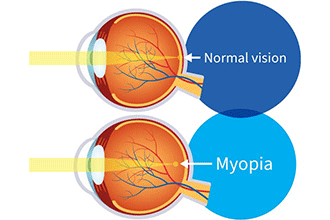
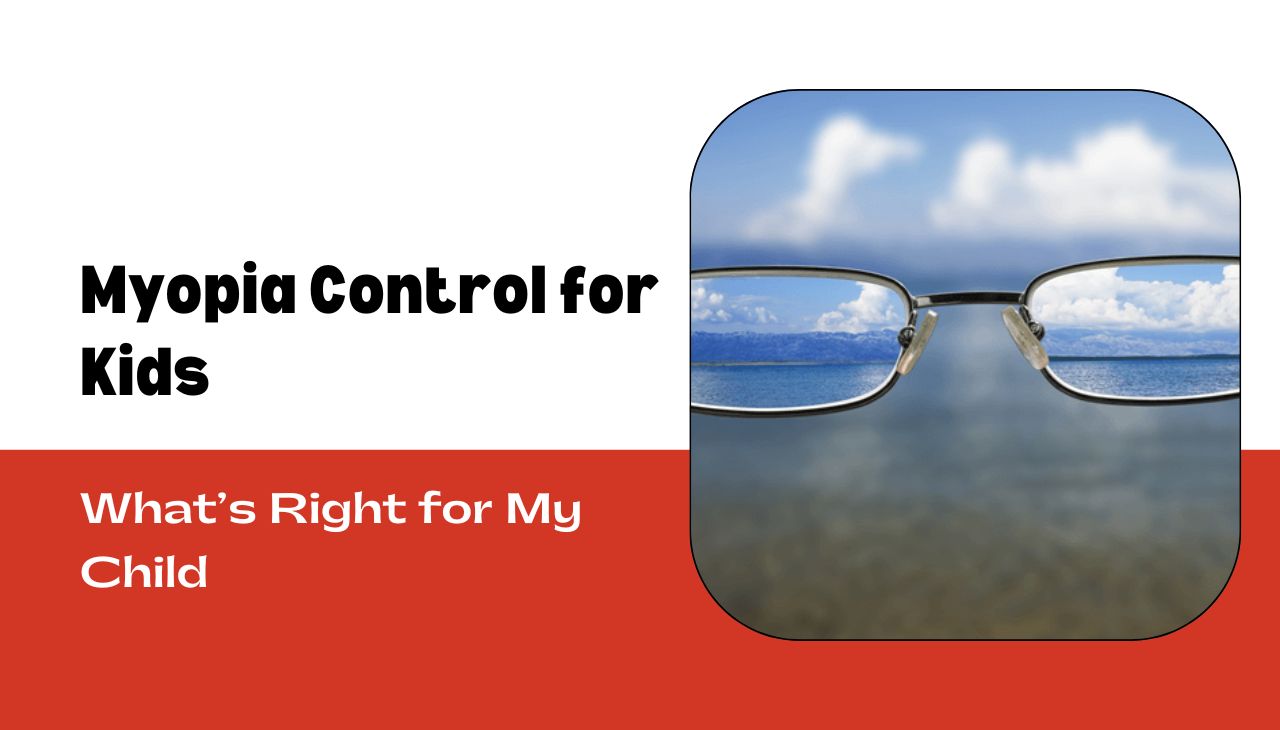
Myopia, or nearsightedness, is a condition where distant objects appear blurry, while close objects are clear. It happens when the eye is too long or the cornea has too much curvature, causing light to focus in front of the retina. This leads to difficulty seeing things like road signs or a whiteboard at school.
Importance of Controlling Myopia in Children
Myopia typically develops in childhood and can worsen as a child grows. If left untreated, high myopia can increase the risk of serious eye problems later in life, such as retinal detachment, glaucoma, and cataracts. That’s why it’s essential to find the right treatment to control its progression.
Treatment Options for Myopia Control
1. Ortho-K Lenses:
Ortho-K, or orthokeratology, involves wearing specially designed contact lenses overnight. These lenses gently reshape the cornea while your child sleeps, temporarily correcting their vision so they can see clearly during the day without the need for glasses or regular contact lenses.
How it Works:
- Ortho-K lenses are worn only at night and removed during the day.
- The lenses flatten the cornea to reduce the focusing power of the eye.
- This reshaping helps slow the progression of myopia over time.
Benefits:
- No need for daytime glasses or contact lenses.
- Provides a non-surgical, safe option for myopia control.
- May improve visual acuity while reducing myopia progression.
2. Atropine Eye Drops:
Atropine eye drops are a medication used to dilate the pupil and relax the focusing muscles of the eye. When used in low doses, atropine can effectively slow the progression of myopia in children.
How it Works:
- Atropine is typically prescribed in low doses (0.01% to 0.5%).
- The drops are applied daily, usually before bedtime.
- It works by reducing the strain on the eye’s focusing system, preventing myopia from worsening.
Benefits:
- Easy to use with a simple daily application.
- Proven to slow myopia progression in many studies.
- Non-invasive, requiring no surgery or long-term commitment like Ortho-K lenses.
Expert Recommendations and Choosing the Best Option for Your Child
When deciding between Ortho-K lenses and atropine eye drops, it’s essential to consider your child’s age, lifestyle, and specific needs. Both treatments have been shown to be effective in controlling myopia, but they offer different approaches:
- Lifestyle Considerations: If your child is active and prefers to avoid wearing glasses or daytime contact lenses, Ortho-K lenses may be the better choice.
- Ease of Use: Atropine eye drops require daily application but don’t involve the effort of wearing lenses overnight. They may be a more straightforward option for some families.
- Long-Term Results: Studies suggest that Ortho-K lenses may offer better long-term control of myopia progression, while atropine drops may require continued use to maintain effectiveness.
Consultation at Laxmi Eye Hospital
Laxmi Eye Hospital has been providing exceptional eye care for over 30 years, offering a range of services to ensure the health and well-being of your eyes. Specializing in Specs Removal / LASIK, Cataract Surgery, Glaucoma Treatment, Diabetic Eye Care, Retina Treatments, and more, Laxmi Eye Hospital is committed to delivering expert solutions for all your vision needs.
Our team of skilled ophthalmologists can guide you through the best treatment options for your child’s myopia, helping you make an informed decision about whether Ortho-K lenses or atropine eye drops are right for them. Schedule your consultation at one of our convenient locations, and let us help you protect your child’s vision for the future.
FAQs
- What age is best for starting myopia control treatments?
- Myopia control treatments can be started as early as age 6, depending on the severity of the condition.
- How long does Ortho-K treatment take to show results?
- Most children experience clearer vision within a few days, and myopia progression slows after several months of use.
- Are atropine eye drops safe for children?
- Yes, atropine drops in low doses are considered safe for children, with minimal side effects.
- Can my child stop using the treatment once their myopia stabilizes?
- Myopia control treatments are often continued until the child’s eyes stop changing. Stopping treatment too early can lead to the return of myopia progression.
- Can Ortho-K lenses be worn during the day?
- No, Ortho-K lenses are designed to be worn only overnight. During the day, the reshaping effect lasts, allowing your child to see clearly without the need for corrective lenses.
- How much do Ortho-K lenses and atropine drops cost?
- Costs vary depending on the treatment and location. Your doctor can provide an estimate based on your child’s needs.
- Are there any long-term side effects of Ortho-K lenses or atropine drops?
- Both treatments are generally safe. However, routine check-ups with your eye care specialist are recommended to monitor progress.
Conclusion
Choosing the right myopia control treatment for your child is a crucial step in ensuring their long-term eye health. Whether you opt for Ortho-K lenses or atropine eye drops, both options offer promising results. Consult with an eye care professional at Laxmi Eye Hospital to determine the best solution for your child’s needs and start protecting their vision today.