Hypermetropia
Hypermetropia, commonly known as farsightedness, is a refractive error that affects how people see objects, particularly those that are close. This condition is quite common and can affect individuals of all ages. Understanding the causes, symptoms, and treatment options for hypermetropia is crucial for maintaining good eye health. In this blog, we will explore what hypermetropia is, how it affects your vision, and the treatments available to correct it.
What is Hypermetropia?
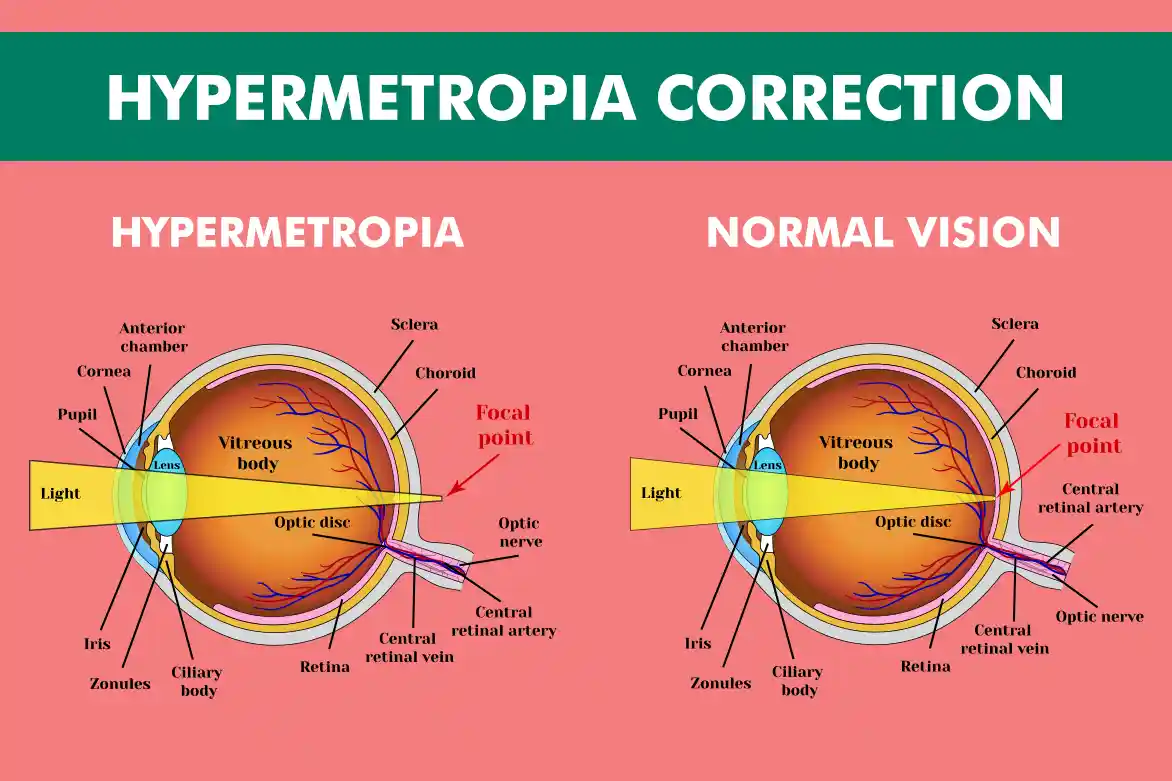
Hypermetropia occurs when the light entering the eye is focused behind the retina instead of directly on it. This happens when the eyeball is too short or the cornea (the eye’s surface) is too flat. As a result, people with hypermetropia often struggle to see close objects clearly, though distance vision may remain sharp.
Key Terms:
- Farsightedness (Hypermetropia): A condition where distant objects are seen clearly, but close objects appear blurry.
- Refractive Error: A problem with focusing light accurately on the retina, leading to vision issues.
- Retina: The light-sensitive layer at the back of the eye that sends visual signals to the brain.
Causes and Symptoms of Hypermetropia
Hypermetropia can be caused by various factors, including genetics and age.
Causes:
- Genetic Factors: If your parents have hypermetropia, there is a higher chance you will develop it as well.
- Eye Shape: A shorter eyeball or a flatter cornea can lead to hypermetropia.
- Age-Related Changes: As people age, the flexibility of the eye’s lens decreases, potentially leading to farsightedness.
Symptoms:
- Difficulty reading or focusing on close objects.
- Eyestrain or headaches after activities like reading or using a smartphone.
- Blurred vision when looking at nearby objects.
- Frequent squinting to see clearly.
Treatment Options for Hypermetropia
Fortunately, there are several ways to manage and treat hypermetropia effectively.
- Eyeglasses:
The most common treatment for hypermetropia is wearing corrective glasses. The lenses help focus light directly onto the retina, improving near vision. - Contact Lenses:
Like glasses, contact lenses can also correct hypermetropia by reshaping the way light enters the eye. - LASIK Surgery:
For those seeking a more permanent solution, LASIK (Laser-Assisted in Situ Keratomileusis) surgery can reshape the cornea, improving vision and reducing or eliminating the need for glasses or contacts. - Cataract Surgery:
If hypermetropia is accompanied by cataracts, surgery to remove the cataract and replace the lens can improve vision.
Additional Tip:
It’s important to get regular eye exams, especially as you age, to detect and manage hypermetropia early.
Insights and Expert Recommendations
While hypermetropia is manageable, some lifestyle habits can help reduce strain on your eyes:
- Take frequent breaks when reading or using screens (the 20-20-20 rule: every 20 minutes, look at something 20 feet away for 20 seconds).
- Adjust lighting to reduce glare and improve focus.
- Keep an eye on your overall health, including diet and exercise, to maintain good vision.
About Laxmi Eye Hospital
Laxmi Eye Hospital specializing in a range of services like specs removal (LASIK), cataract surgery, glaucoma treatment, and diabetic eye care, Laxmi Eye Hospital is dedicated to providing high-quality, personalized care for all your eye health needs. Our experts use advanced technology to ensure optimal results for every patient.
FAQs
- What is the difference between hypermetropia and myopia?
- Hypermetropia is farsightedness, where distant objects are clear, but near objects are blurry. Myopia, or nearsightedness, is the opposite, where close objects are clear, but distant objects are blurry.
- Can hypermetropia get worse over time?
- Yes, as you age, your vision may change, and hypermetropia can worsen, particularly as the eye’s lens loses flexibility.
- Is LASIK surgery safe for treating hypermetropia?
- Yes, LASIK is a safe and effective treatment for hypermetropia, though suitability depends on individual eye health.
- Can children have hypermetropia?
- Yes, hypermetropia is common in children and can often be treated with glasses or contact lenses.
- What can I do to reduce eye strain caused by hypermetropia?
- Ensure proper lighting, take regular breaks, and consider corrective eyewear to reduce strain.
Conclusion
Hypermetropia is a manageable condition with the right treatments and lifestyle adjustments. Whether through glasses, contact lenses, or advanced surgical procedures like LASIK, options are available to help restore clear vision. If you’re experiencing symptoms of farsightedness, consult an eye care professional at Laxmi Eye Hospital to explore your treatment options and regain visual clarity.