ICL Surgery Cost in India
If you have high myopia, you may already know that LASIK is not suitable for everyone. Thick glasses, high-power contact lenses, or being told that your cornea is not suitable for laser correction can leave you looking for another option.
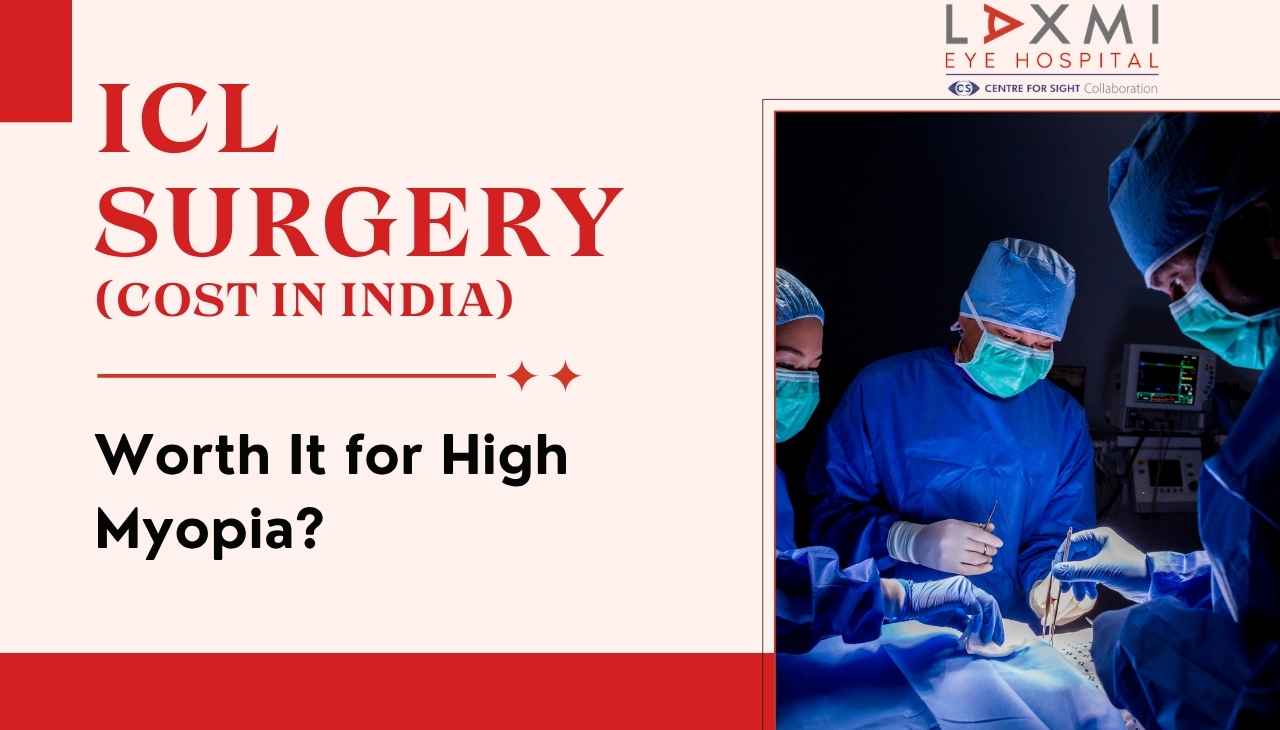
That is where ICL surgery comes into the picture. An Implantable Collamer Lens is placed inside the eye to correct myopia without removing corneal tissue.
But there is one question many patients ask before taking the next step: Is ICL worth the cost?
In India, the price can vary considerably based on the lens, hospital, surgeon, diagnostic tests, and whether you need correction for astigmatism. Here is what you should know before comparing prices or booking a consultation.
What Is ICL Surgery and Who Is It For?
ICL stands for Implantable Collamer Lens. It is a phakic intraocular lens used to correct refractive errors such as myopia. The lens is placed inside the eye while the natural lens remains in place. Unlike LASIK, the procedure does not reshape the cornea by removing tissue.
This can make ICL an option for selected people with high myopia, especially when laser vision correction is not advisable.
But having a high spectacle number is not enough to qualify.
Your ophthalmologist will check several factors before recommending surgery. These may include your prescription, corneal measurements, the depth of the front part of your eye, pupil size, eye pressure, retinal health, and the number and health of your corneal endothelial cells.
What are endothelial cells?
They are tiny cells that help keep the cornea clear by regulating fluid. If their number is too low, an ICL may not be suitable because the risk of corneal problems can increase.
Your prescription should also be stable before refractive surgery. A changing spectacle power may mean that you are not ready for an ICL procedure.
What Is the ICL Surgery Cost in India?
There is no single price for ICL surgery in India.
Current published 2026 prices show a broad range. Some providers quote around ₹52,500 to ₹1,05,000, while other Mumbai sources report roughly ₹80,000 to ₹1,50,000 per eye. Premium or toric options can cost more.
A practical budget for many private centres is around ₹90,000 to ₹1,60,000 per eye, but your actual quotation can fall outside this range.
What makes the price different?
| Cost factor | Why it matters |
|---|---|
| ICL lens | Different lens platforms and specifications have different prices |
| Toric ICL | Needed when significant astigmatism also requires correction |
| Eye measurements | Advanced diagnostic testing can add to the package |
| Surgeon charges | Experience and surgical expertise can influence the fee |
| Hospital charges | Facility, operating room and anaesthesia-related charges may vary |
| Medicines and follow-ups | Some packages include them, while others charge separately |
For example, a 2026 Mumbai pricing guide lists standard spherical ICLs at about ₹60,000 to ₹90,000 per eye, EVO spherical ICLs at about ₹90,000 to ₹1,20,000, and EVO toric ICLs at about ₹1,00,000 to ₹1,50,000 per eye. These are indicative figures, not fixed prices.
This is why two clinics can give you very different quotes for what sounds like the same surgery.
When checking the ICL surgery cost in India, ask for a complete written estimate rather than comparing the headline price alone.
Why Can ICL Be Useful for High Myopia?
High myopia is not just about a larger spectacle number.
As the prescription increases, the thickness and weight of spectacle lenses can become more noticeable. Some people also find high-power contact lenses uncomfortable or difficult to manage.
ICL offers another way to correct the prescription.
Key advantages include:
- It corrects myopia without removing corneal tissue.
- It can be considered for selected patients with high refractive errors.
- The natural eye lens is retained.
- The implanted lens can be removed or replaced if medically necessary.
- It may reduce dependence on high-power glasses or contact lenses.
The last point is important. ICL does not guarantee that you will never need glasses again. Some patients may still require glasses for specific activities or may need further correction.
If you are researching myopia treatment in Mumbai, ask whether your eye anatomy makes you a suitable candidate for ICL, rather than choosing a procedure based only on your spectacle power.
ICL vs LASIK for High Myopia
Patients often compare ICL and LASIK because both can reduce dependence on glasses. The procedures work in very different ways.
| Feature | LASIK | ICL |
|---|---|---|
| How it works | Reshapes the cornea | Places a corrective lens inside the eye |
| Corneal tissue removed | Yes | No |
| Natural lens retained | Yes | Yes |
| Lens can be removed | Not applicable | Yes, when medically necessary |
| Use in high myopia | May be unsuitable for some patients | Can be considered in selected high-myopia cases |
| Astigmatism correction | Can correct it in suitable cases | Toric ICL can correct it |
| Main suitability factors | Corneal thickness, shape, prescription and eye health | Eye anatomy, prescription, anterior chamber, endothelial cells and eye health |
So which one is better?
That depends on your eyes.
If your cornea can safely support laser correction, LASIK or another laser procedure may be considered. If your prescription or corneal characteristics make laser treatment unsuitable, ICL may offer another route.
A consultation with an Ophthalmologist in Mumbai can help you compare these options based on your actual measurements rather than online averages.
What Are the Risks and Side Effects of ICL?
ICL has a good role in refractive surgery, but it is still an intraocular procedure. Understanding the possible risks is part of making a good decision.
Possible visual side effects
Some patients may experience:
- Glare
- Halos around lights
- Difficulty with night vision
- Double vision or visual disturbances
These symptoms may be temporary in some patients, but persistent visual symptoms can occur.
Less common but serious complications
Potential complications include:
- Increased eye pressure
- Cataract formation
- Loss of corneal endothelial cells
- Infection or severe inflammation
- Retinal detachment
- Need for lens repositioning, replacement or removal
The FDA also notes that not every patient achieves perfect vision after phakic lens implantation and that some people may continue to require glasses or contact lenses.
This is why choosing a clinic based only on the lowest ICL surgery cost in India is not a good strategy.
Is ICL Surgery Worth the Cost?
This is where the decision becomes personal.
Suppose you have a very high prescription and have spent years paying for high-index spectacle lenses, prescription sunglasses, contact lenses, solutions and replacements.
Now compare those expenses with the cost of a surgical procedure intended to reduce your dependence on corrective lenses.
That does not mean ICL is automatically cheaper in the long term. Surgery has its own cost and risks. Your prescription may also change with age, and you may eventually need reading glasses or other vision correction.
The better question is:
What value would reducing your dependence on glasses or contact lenses bring to your daily life?
For someone who struggles with high-power glasses during travel, sports, work or social activities, that benefit may be significant.
For another person who is comfortable with glasses, the cost may not feel justified.
There is also a practical point that many patients overlook. The cheapest quote may not be the cheapest treatment overall if important diagnostic tests, follow-up visits or required lens specifications are excluded.
If you are considering myopia treatment in Mumbai, compare what you are actually receiving rather than comparing only the number on the quotation.
How to Compare ICL Surgery Prices
Before choosing a centre such as a Laxmi Eye clinic or another eye care facility, ask these questions:
- Which ICL lens will be used?
- Is the quoted price for one eye or both eyes?
- Do I need a toric ICL for astigmatism?
- Are all pre-operative tests included?
- Are medicines and follow-up visits included?
- What happens if the lens needs repositioning or replacement?
- Who will perform the surgery?
- What results can realistically be expected with my prescription?
These questions can reveal why one quote is ₹90,000 and another is ₹1,50,000.
A detailed eye examination should come before the final price because the exact lens specification and suitability depend on your individual eye measurements.
FAQs About ICL Surgery
Can you feel the ICL inside your eye?
You should not normally feel the implanted lens once the eye has recovered. It sits inside the eye rather than on its surface like a contact lens.
How long does an ICL last?
An ICL is designed for long-term implantation. It does not have to be routinely replaced after a fixed number of years. It may be removed or replaced later if your eye condition or visual needs require it.
Can ICL correct very high myopia?
ICL can correct high myopia within the approved range of the particular lens. Your surgeon will check your prescription and eye anatomy to determine whether the available lens options are suitable.
Can ICL be removed?
Yes. An implanted phakic lens can be removed or replaced when medically necessary. Removal is still another eye procedure and carries its own risks.
Will I still need glasses after ICL?
Possibly. The goal is to reduce dependence on glasses, not to promise perfect vision in every situation. Some patients may need glasses for particular tasks or later changes in vision.
Does ICL surgery hurt?
The eye is numbed before the procedure, so significant pain during surgery is not expected. Mild irritation, watering or light sensitivity can occur during recovery.
Can ICL replace LASIK?
Not exactly. ICL and LASIK are different procedures. ICL may be considered when laser correction is not suitable, while LASIK may be appropriate for selected patients with suitable corneal measurements.
Is ICL covered by health insurance in India?
Refractive procedures are often treated differently from medically necessary eye surgery, so coverage can be limited or excluded. Check your specific policy and ask the hospital for a written estimate before planning the procedure.
Conclusion
ICL can be a useful option for selected people with high myopia, especially when LASIK is not suitable. The ICL surgery cost in India can range from roughly ₹90,000 to ₹1,60,000 per eye in many private settings, with the final price depending on the lens, diagnostic workup, surgeon and hospital. Price should be only one part of your decision. If you are exploring myopia treatment in Mumbai, start with a detailed eye examination and discuss your prescription, corneal measurements, retinal health, expected visual outcome and long-term options with an experienced Ophthalmologist in Mumbai. The right procedure is the one that fits your eyes and your visual needs, not simply the one with the lowest quotation.