
Pingueculitis Causes & Treatment in Mumbai
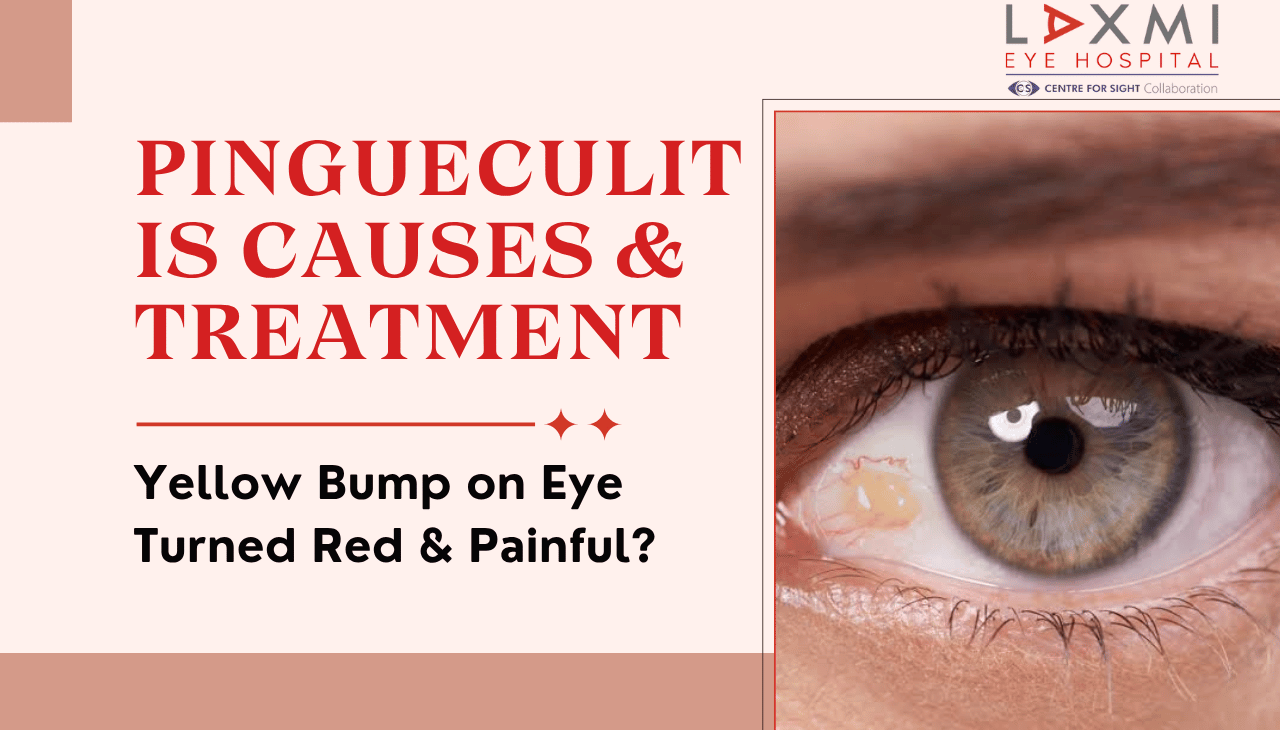
Have a raised, yellowish spot on the white of your eye that suddenly became red, swollen, or gritty? It could be pingueculitis, inflammation of a common, noncancerous growth called a pinguecula.
The sudden redness can be worrying, especially if you fear an infection, eye cancer, or vision loss. Fortunately, pingueculitis is usually treatable and rarely threatens eyesight.
But how can you tell whether that red bump is harmless or needs medical attention? Understanding the symptoms, treatment options, and warning signs can help you make the right decision.
1. What Is Pingueculitis, and Why Does a Yellow Eye Bump Turn Red?
A pinguecula is a small, raised, yellowish deposit on the conjunctiva, the transparent tissue covering the white of your eye. It commonly appears on the side closest to your nose.
A pinguecula may remain unchanged for years without causing discomfort.
When sunlight, dryness, or environmental irritants trigger inflammation around this growth, the condition is called pingueculitis.
Common Signs of Pingueculitis
- Localised redness surrounding the yellow bump
- Burning, itching, or a gritty sensation
- Mild swelling around the growth
- Excessive watering or dryness
- Discomfort while blinking
- Increased irritation after outdoor exposure
Unlike serious inflammatory eye diseases, uncomplicated pingueculitis generally causes surface discomfort rather than severe, deep eye pain.
An ophthalmologist in Mumbai can confirm the diagnosis through a slit-lamp examination.
2. Why Is Pingueculitis Common in India’s Climate?
India’s environmental conditions can contribute to pinguecula formation and repeated eye irritation.
High UV Exposure
Prolonged exposure to ultraviolet radiation is an established risk factor for pinguecula.
Outdoor workers, delivery professionals, and people spending extended periods in direct sunlight may face greater exposure.
Dust and Traffic Pollution
Mumbai’s construction dust, road pollution, and daily commuting conditions can aggravate an already sensitive eye surface.
Two-wheeler riders may experience additional irritation from wind and airborne particles.
Dry Winters and Air Conditioning
Dry winter air and prolonged air-conditioning can accelerate tear evaporation, increasing discomfort around an existing pinguecula.
Monsoon-Related Irritation
Monsoon winds, airborne debris, and fluctuating humidity may worsen existing eye irritation. Monsoon weather itself does not directly cause pingueculitis.
Wearing UV400 sunglasses, using protective eyewear during dusty commutes, and managing dry eyes can help reduce flare-ups.
3. Pingueculitis vs Other Eye Conditions: What Is the Difference?
Not every red eye with a visible bump is pingueculitis. Some conditions require a different treatment approach.
| Eye Condition | Key Difference |
|---|---|
| Pingueculitis | Redness and inflammation centred around a raised yellow conjunctival bump |
| Episcleritis | Localised or widespread inflammation of deeper surface vessels, usually without a yellow growth |
| Pterygium | Wing-shaped tissue extending across the limbus onto the cornea, sometimes affecting vision |
| Conjunctivitis | More widespread redness, often with itching, watering, discharge, or sticky eyelids |
| Scleritis | Deep inflammation that may cause severe, boring pain and tenderness |
| Phlyctenular keratoconjunctivitis | Small inflammatory nodules near the cornea, sometimes associated with marked light sensitivity |
| Ocular Surface Squamous Neoplasia (OSSN) | An abnormal surface lesion that may have irregular, gelatinous, or white plaque-like features |
Ophthalmologists may use vessel depth, lesion appearance, and specialised examinations to distinguish these conditions. Phenylephrine testing can sometimes help differentiate episcleritis from scleritis, but patients should never attempt this themselves.
Could a Yellow Eye Bump Be Cancer?
A typical pinguecula is benign and does not usually develop into cancer.
Still, a rapidly growing lesion, unusual white patches, irregular borders, or prominent feeder blood vessels should prompt examination to exclude OSSN or another abnormal growth.
If you notice these changes, consult an Ophthalmologist in Mumbai rather than assuming every yellow or red bump is pingueculitis.
4. Pingueculitis Treatment: Which Eye Drops Actually Help?
Effective pingueculitis treatment focuses on calming inflammation and restoring moisture to the eye’s surface.
Preservative-Free Artificial Tears
Lubricating drops containing carboxymethylcellulose, sodium hyaluronate, or trehalose may reduce irritation.
Your doctor may recommend applying them four to six times daily, depending on symptoms and the formulation.
Preservative-free options are often preferable when frequent lubrication is necessary because preservatives such as benzalkonium chloride can irritate a sensitive ocular surface.
Prescription Anti-Inflammatory Drops
Moderate or persistent pingueculitis may require prescription treatment.
An ophthalmologist may consider short courses of topical corticosteroids such as fluorometholone or loteprednol etabonate.
Topical nonsteroidal anti-inflammatory drugs, including selected indomethacin formulations, may be considered in certain cases.
These medications are not suitable for everyone. Even relatively mild steroid drops can increase eye pressure, delay healing, or worsen an undiagnosed infection. Some topical NSAIDs can also damage the corneal surface.
An eye specialist must determine whether these medicines are appropriate and monitor their use.
Avoid Redness-Relief Drops
Over-the-counter drops containing tetrahydrozoline or naphazoline temporarily constrict blood vessels.
They may make your eye look whiter without treating the inflammation.
Repeated use can lead to rebound hyperemia, where redness returns or becomes worse when the medication wears off.
Is Surgery Required?
Most cases of pingueculitis improve without surgery.
When a pinguecula causes repeated inflammation, severe contact lens intolerance, or persistent cosmetic concerns, removal may be considered.
Options include surgical excision, sometimes with ocular surface reconstruction, or selected laser procedures.
Remember, eye drops calm the inflammation, but they do not remove the underlying pinguecula.
5. When Should You See an Ophthalmologist Immediately?
Mild surface irritation may improve with lubrication and reduced exposure to irritants.
Certain symptoms need urgent attention because they are unusual for uncomplicated pingueculitis.
Seek Urgent Eye Care If You Experience
- Severe, deep eye pain extending towards your temple
- Pain when moving your eye
- Sharp pain or marked sensitivity to light
- Sudden reduction in vision
- Blurred vision that does not clear after blinking
- Thick yellow-green discharge
- Rapidly increasing swelling or redness
Contact lens wearers with a painful, red eye should also seek prompt examination because corneal infection is a concern.
At Laxmi Eye Hospital, patients seeking assessment for a red eye can discuss their symptoms and the need for a detailed ocular surface examination.
Accurate diagnosis matters more than choosing eye drops based only on redness.
6. Can You Prevent Pingueculitis From Coming Back?
You may not be able to reverse an existing pinguecula, but you can reduce repeated irritation.
Protect your eyes outdoors: Choose UV400 wraparound sunglasses and a wide-brimmed hat during prolonged sun exposure.
Manage dryness: Use doctor-recommended lubricating drops and take regular breaks during screen work.
Avoid eye rubbing: Rubbing can aggravate an already inflamed surface.
Limit irritant exposure: Use protective eyewear during dusty commutes and outdoor work.
Review recurring symptoms: Repeated pingueculitis may require assessment of tear quality, eyelid health, and the underlying growth.
If you are exploring other services such as LASIK Surgery in Mumbai, discuss existing ocular surface dryness before refractive surgery.
Likewise, patients attending consultations for Glaucoma Treatment in Mumbai or Cataract Surgery in Mumbai should mention persistent redness and any eye drops they already use. These are separate conditions, but a complete eye history helps guide safe care.
Frequently Asked Questions About Pingueculitis
Uncomplicated pingueculitis rarely threatens vision. Severe pain, light sensitivity, or reduced eyesight may indicate another condition requiring urgent assessment.
Mild inflammation may improve within several days with suitable treatment. Persistent irritation may take longer, especially when dryness or environmental exposure continues.
No. Pingueculitis is an inflammatory condition, not a contagious infection.
Antibiotics do not routinely treat pingueculitis because it is generally noninfectious. They are appropriate only when an eye doctor identifies a separate bacterial problem.
Yes. The underlying pinguecula remains after inflammation settles, so further episodes are possible, especially with continued UV exposure or dry eye symptoms.
No home remedy has been proven to remove a pinguecula. Cool compresses and suitable artificial tears may relieve mild discomfort. Avoid putting rose water, herbal preparations, or homemade solutions directly into your eye.
No. A pinguecula appears as a localised yellowish bump. Jaundice typically causes more widespread yellow discolouration of the whites of the eyes.
Conclusion
A yellow bump that suddenly becomes red, swollen, or uncomfortable may be a sign of pingueculitis. Although this condition is usually harmless, persistent inflammation deserves proper evaluation. Preservative-free artificial tears, UV protection, and appropriate prescription treatment can help manage symptoms and reduce future irritation. If your eye becomes painful, your vision changes, or the growth looks unusual, seek an ophthalmologist’s assessment. Early diagnosis and the right eye care can protect your comfort and long-term vision.

