7 Early Signs of Cataracts: Expert Eye Care at Laxmi Eye Hospital, Mumbai
You clean your glasses twice, increase your phone’s brightness, and move the restaurant menu closer to the light. Yet the words still look unclear. On your drive home, headlights seem unusually bright, making it difficult to see the road ahead.
It is easy to blame these changes on ageing or an outdated glasses prescription. But sometimes, they are early signs of cataracts.
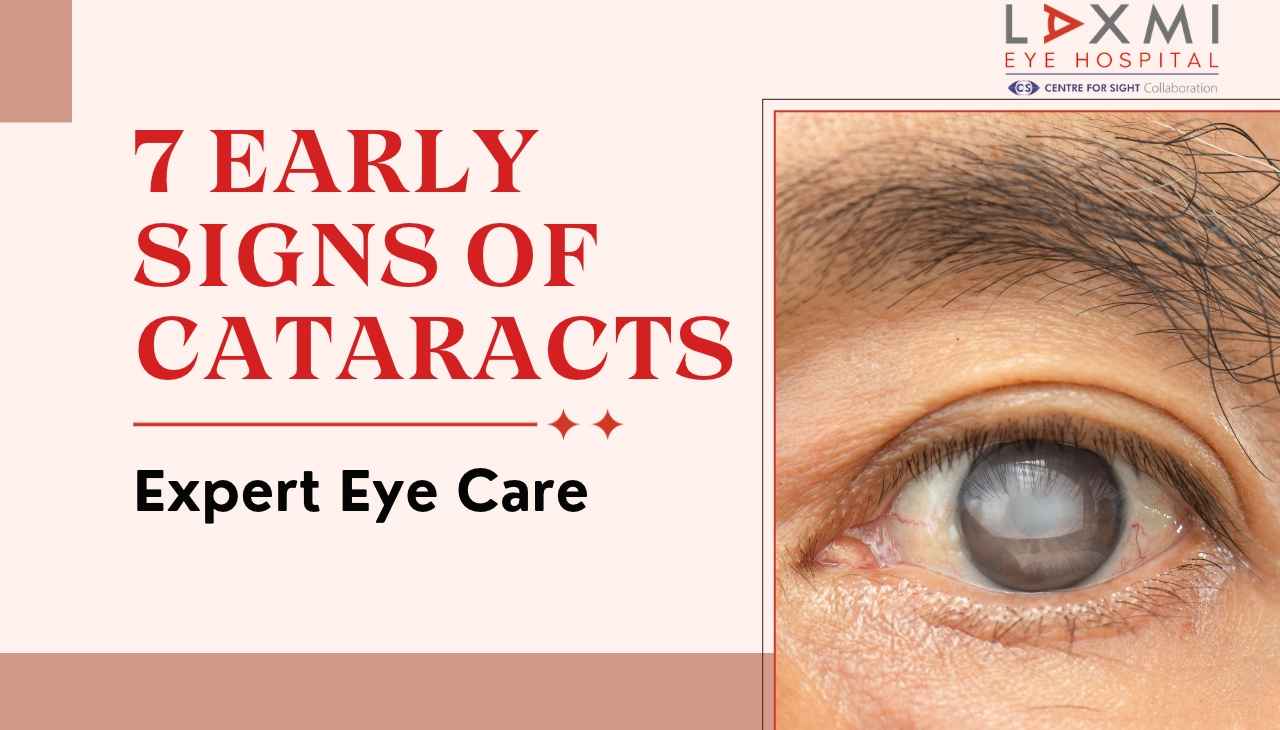
Cataracts develop gradually, often without pain. Recognising these seven warning signs can help you understand when to consult an Ophthalmologist in Mumbai for a complete eye examination.
1. Seven Early Warning Signs of Cataracts You Should Not Ignore
Sign 1: Blurry Vision That Never Seems to Clear
Cataract-related blurriness often feels like looking through a foggy windshield. You may clean your glasses, blink repeatedly, or rub your eyes, but the haziness remains.
Unlike temporary blurriness caused by dry eyes, cataract-related cloudiness usually develops gradually and persists. It can affect reading, watching television, or recognising faces.
If new glasses no longer provide clear vision, a cataract could be responsible.
Sign 2: Difficulty Seeing in Dim Lighting
You can read comfortably during the day, but suddenly need an extra lamp to read your evening newspaper.
Cataracts reduce contrast sensitivity, making it harder to distinguish objects from their surroundings in low light. You might struggle to identify pedestrians wearing dark clothes or notice steps in a poorly lit staircase.
These changes can affect your confidence while moving around at night, even before daytime vision becomes noticeably blurry.
Sign 3: Bright Lights Feel Unusually Uncomfortable
Have supermarket lights or afternoon sunlight started bothering your eyes?
A cloudy lens scatters incoming light, increasing glare and making bright environments uncomfortable. You may squint frequently or find it difficult to see clearly against strong sunlight.
This sensitivity is different from poor night vision. Here, the problem is excessive brightness rather than insufficient light.
Sign 4: Halos and Starbursts Around Lights
Streetlights that once appeared as small, clear points may now have glowing rings or radiating streaks.
These effects, called halos and starbursts, occur when light scatters as it passes through the cloudy lens.
They become particularly noticeable around headlights and traffic signals. Since glaucoma and corneal problems can also cause halos, an eye examination helps identify the reason.
Sign 5: White Objects Start Looking Yellow
Imagine looking at a white wall after cataract surgery in one eye. Your operated eye sees bright white, while the untreated eye sees a cream-coloured shade.
This difference can surprise patients who never realised their colour vision had changed.
As certain cataracts develop, the natural lens becomes yellowish or brownish. Blues may appear dull, whites may look warmer, and distinguishing similar colours becomes difficult.
Sign 6: Your Glasses Prescription Keeps Changing
One unusual cataract symptom is a temporary improvement in near vision, sometimes called “second sight.”
As certain cataracts develop, the lens becomes denser and changes its focusing power. This can make some people who previously needed reading glasses suddenly able to read without them.
Unfortunately, this improvement is temporary. As clouding progresses, vision becomes increasingly unclear.
Frequent prescription changes deserve investigation rather than repeated replacement of glasses.
Sign 7: Double Vision in One Eye
You might notice overlapping letters while reading or a faint second image beside an object.
Certain cataracts can produce double vision within a single eye, known as monocular diplopia. Unlike double vision caused by eye misalignment, it may remain even when you cover the other eye.
Double vision has several possible causes. Sudden onset, especially with neurological symptoms, requires urgent medical assessment.
2. Cataracts or Normal Ageing: How Can You Tell?
Not every age-related vision change means cataracts. After age 40, many people develop presbyopia, which makes focusing on nearby objects difficult.
Cataracts affect how clearly light passes through the eye, creating different visual problems.
| Symptom | Normal Ageing (Presbyopia) | Possible Cataracts |
|---|---|---|
| Distance affected | Mainly near vision | Near and distance vision |
| New glasses | Usually improve near focus | May not eliminate haziness |
| Colour perception | Generally unchanged | Colours may appear yellow or faded |
| Night driving | Not directly affected | Glare and halos may interfere |
| Vision quality | Blurry mainly at near distances | Cloudy or hazy vision |
The two conditions can occur together. A comprehensive examination helps distinguish them.
At Laxmi Eye Hospital, patients with changing vision can undergo an evaluation to identify cataracts and other possible eye conditions.
3. What Causes Cataracts, and Who Is at Risk?
Your eye contains a natural lens that focuses light, much like a camera lens. With age, proteins within this lens can break down and clump together, gradually reducing its transparency.
Although ageing is the most common cause, several factors increase cataract risk:
- Diabetes, particularly when blood sugar remains poorly controlled
- Long-term exposure to ultraviolet sunlight
- Smoking and excessive alcohol consumption
- Previous eye injuries or surgery
- Prolonged corticosteroid use
- Family history of cataracts
Protecting your eyes from UV exposure and managing existing medical conditions may help reduce your risk.
Foods containing lutein, zeaxanthin, vitamin C, and vitamin E, including spinach, leafy greens, citrus fruits, and nuts, support general eye health. No specific food or supplement has been proven to reverse cataracts.
4. What Happens During a Cataract Eye Examination?
A cataract examination is generally comfortable and does not involve surgery.
Your ophthalmologist first checks your vision and current glasses prescription. A slit-lamp microscope helps examine the natural lens for clouding.
Dilating drops may then be used to examine the lens, retina, and optic nerve more closely.
Your appointment may take around 30–60 minutes or longer, depending on the tests required. Dilating drops can temporarily blur near vision and increase light sensitivity for several hours.
If you are considering Cataract Surgery in Mumbai, this evaluation also helps determine whether surgery is necessary and which treatment options suit your eyes.
5. When Is Cataract Surgery Necessary?
Finding a cataract does not mean you need immediate surgery.
During the early stages, brighter lighting, anti-glare sunglasses, and updated glasses may help. Surgery becomes worth considering when cataracts interfere with reading, driving, working, or everyday independence.
During cataract surgery, the cloudy natural lens is removed and replaced with an artificial intraocular lens (IOL).
The procedure is usually performed as day-care surgery using local anaesthesia. The surgical portion may take approximately 10–30 minutes, although complex cases take longer.
Depending on your eye measurements and suitability, toric lenses may correct astigmatism, while certain presbyopia-correcting lenses can reduce dependence on reading glasses.
LASIK Surgery in Mumbai is a different procedure. LASIK reshapes the cornea to correct refractive errors, while cataract surgery replaces the cloudy natural lens.
Patients also seeking Glaucoma Treatment in Mumbai should discuss their complete eye health with their ophthalmologist, as glaucoma can influence cataract surgery planning and visual outcomes.
When Is It an Eye Emergency?
Sudden vision loss, severe eye pain, new flashes of light, or a dark curtain moving across your vision are not typical symptoms of slowly developing cataracts.
These signs may indicate retinal detachment or another serious eye condition. Seek immediate ophthalmic care rather than waiting for a routine appointment.
Frequently Asked Questions About Cataracts
No. Currently, no eye drops, supplements, or medications have been proven to reverse existing cataracts. Surgery is the only established method of removing the cloudy lens.
Many adults can safely monitor early cataracts for months or years when vision remains functional. The appropriate timing depends on your symptoms, eye health, and daily activities. Your ophthalmologist can advise you based on regular examinations.
It is better to arrange transport if your pupils will be dilated. Blurred near vision and light sensitivity may last approximately four to six hours, sometimes longer. Avoid driving until your vision has returned to normal.
Most patients experience little or no pain because the eye is numbed using anaesthetic drops or another form of local anaesthesia. You may notice lights, movement, or mild pressure during the procedure.
The original cataract cannot return because the cloudy lens has been removed. Some patients develop posterior capsule opacification, sometimes called a secondary cataract. A short YAG laser procedure can usually restore clarity.
That depends on the artificial lens selected, existing eye conditions, and your visual needs. Some patients require reading glasses, while others may achieve greater spectacle independence with suitable lens options.
Your 3-Question Cataract Self-Check
Before your next eye appointment, consider these questions:
- Where does your vision trouble you most, while reading, driving, or seeing in dim lighting?
- Does one eye see colours or objects less clearly than the other?
- Have new glasses stopped improving your vision as much as they once did?
Your answers can help your ophthalmologist understand how your symptoms affect everyday life.
Gradual vision changes should never be dismissed automatically as ageing. If blurry vision, glare, faded colours, or frequent prescription changes are interfering with your routine, arrange a comprehensive eye examination.
For patients experiencing these symptoms, Laxmi Eye Hospital offers ophthalmic consultations and cataract evaluation across its Navi Mumbai locations. Early assessment can help you understand your condition, explore appropriate treatment, and make informed decisions about protecting your vision.