
Myopia, or nearsightedness, is rising rapidly worldwide, and many people treat it as a simple vision problem corrected with glasses. But when myopia becomes high or progresses quickly, it can affect long-term eye health in ways many do not expect. Clinics like Laxmi Eye Hospital, known for treating a wide range of eye conditions, regularly see patients concerned about this progression. If your number keeps increasing or you are worried about future risks, it is important to understand how high myopia can impact your vision.
This blog breaks down the truth about high myopia, its possible complications, early warning signs, and safe treatment options.
What Is Myopia and When Does It Become Risky?
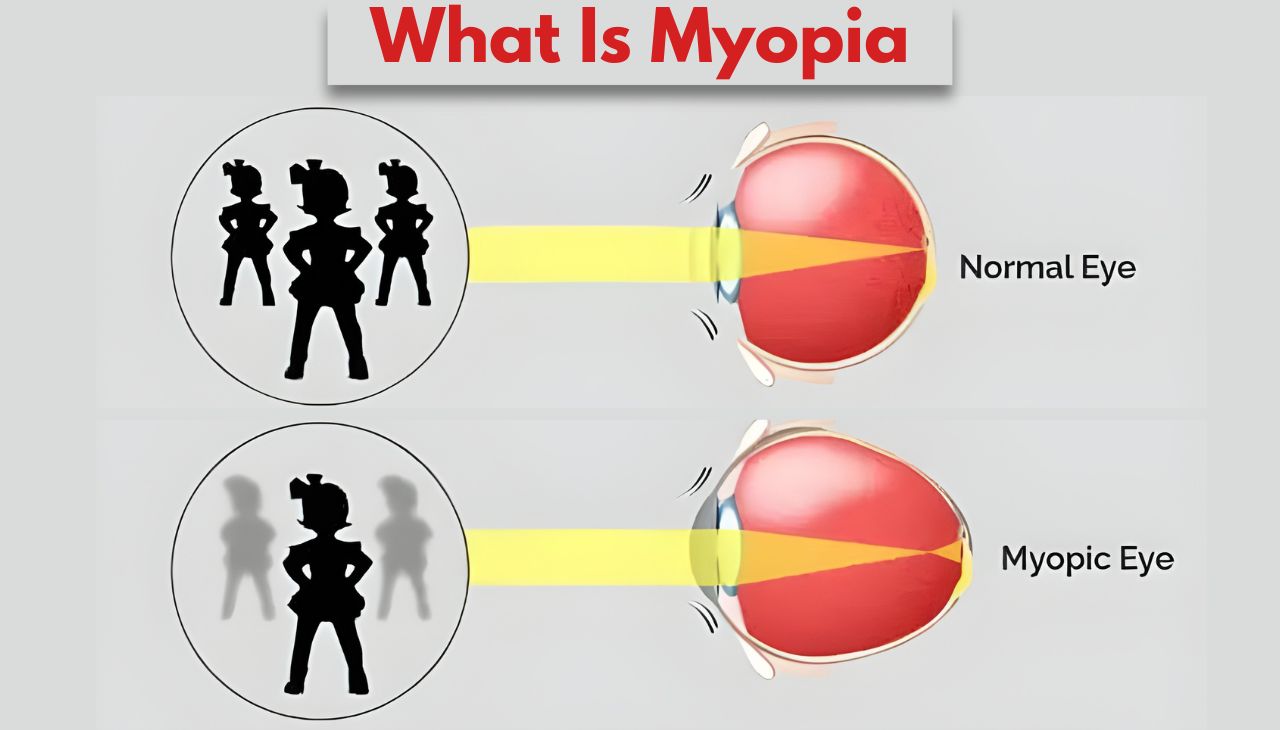
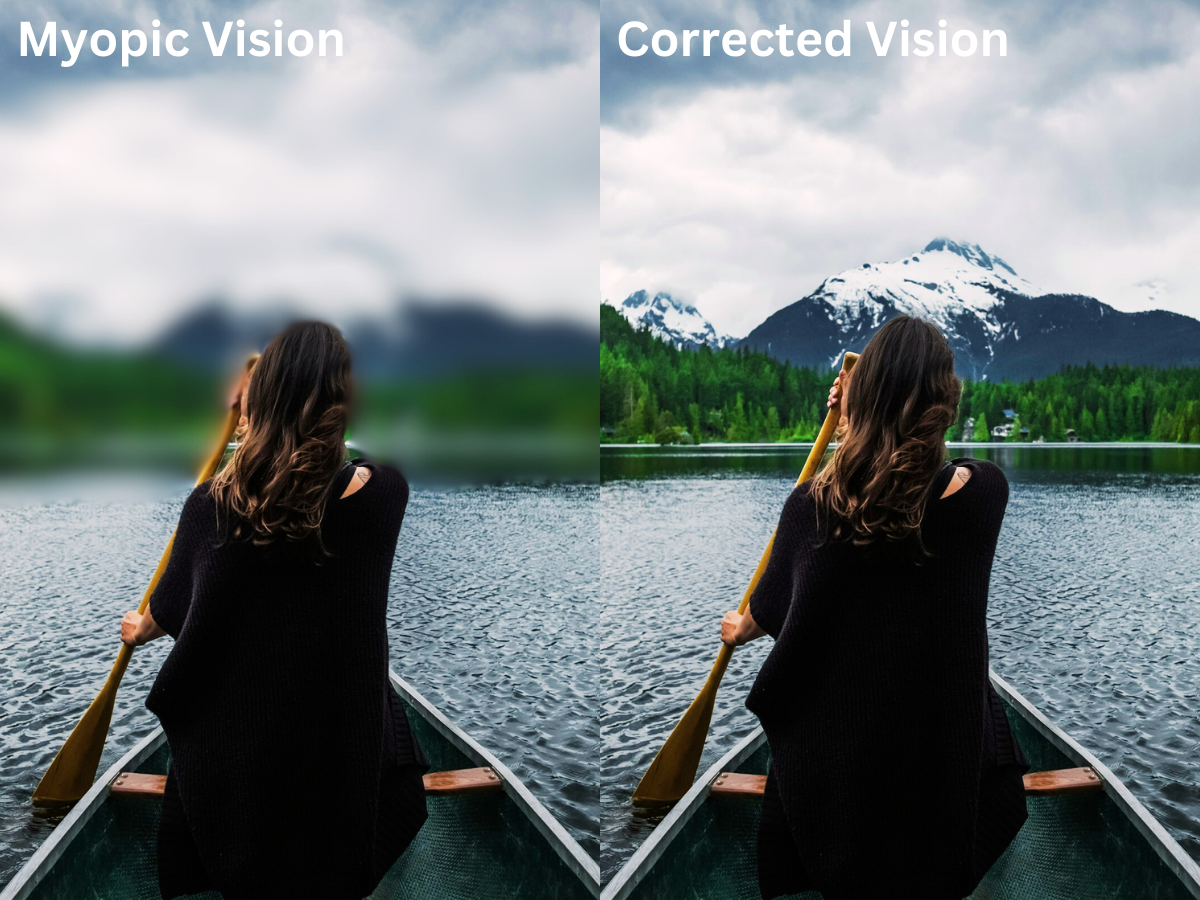
Myopia occurs when the eye grows longer than normal, causing light to focus in front of the retina instead of directly on it.
Mild myopia usually does not harm your eye health. But when the power crosses -6.00 diopters or the axial length becomes more than 26 mm, it is called high myopia.
High myopia increases the strain on the retina and other structures of the eye, raising the risk of several complications.
How Can High Myopia Affect the Eyes?
High myopia is not just about thicker glasses. It changes the structure of the eye.
When the eyeball elongates, the retina becomes stretched and thin. This makes the eye more vulnerable to damage over time.
Here are the common risks associated with high myopia.
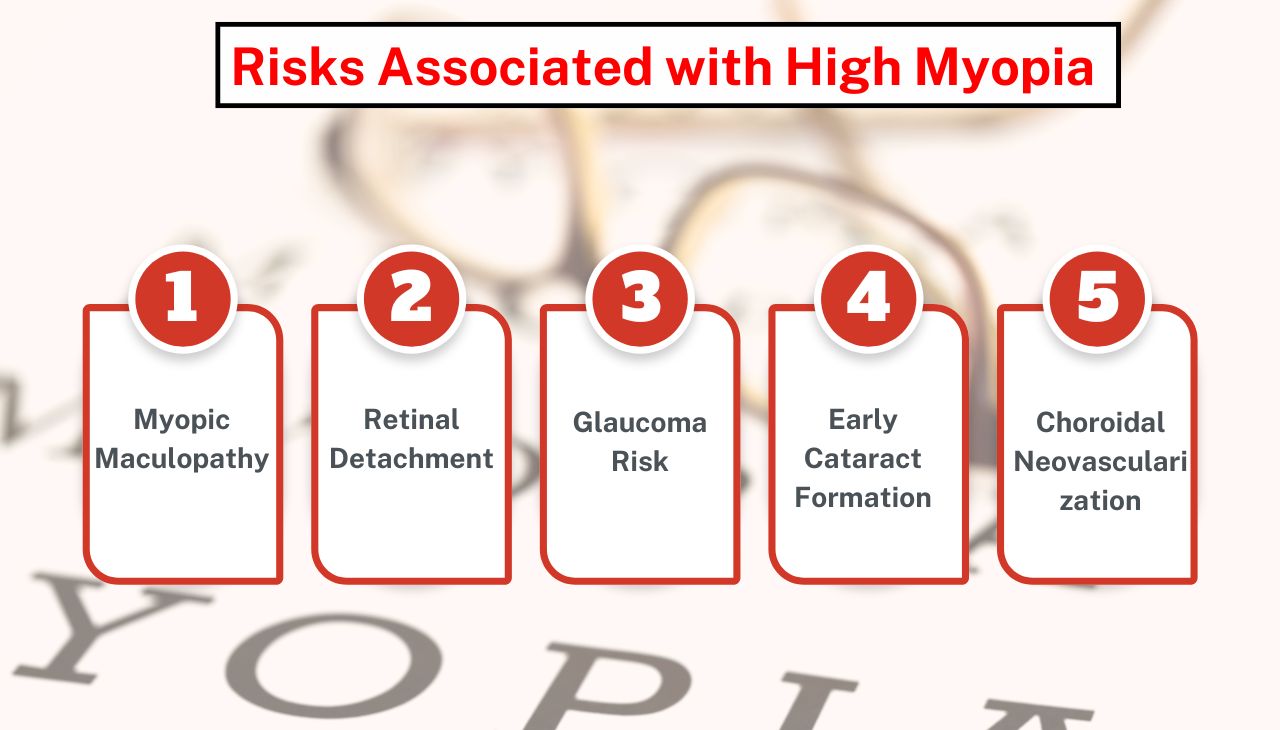
1. Myopic Maculopathy
The macula controls sharp central vision. High myopia can damage the macula because of thinning and degeneration.
This can lead to distorted vision, blind spots, and reduced reading ability.
2. Retinal Detachment
A longer eye increases the chances of retinal tears or detachment.
Retinal detachment is a medical emergency and can cause permanent vision loss if ignored.
Floaters, flashes of light, or a curtain-like shadow in your vision need urgent care.
3. Glaucoma Risk
People with high myopia are at a greater risk of developing glaucoma.
Glaucoma damages the optic nerve and often progresses without symptoms until the advanced stage.
4. Early Cataract Formation
High myopia increases the likelihood of developing cataracts earlier in life.
This may lead to cloudy vision and difficulty seeing in low light.
5. Choroidal Neovascularization
Abnormal blood vessels may grow under the retina in highly myopic eyes.
This can cause severe vision loss if not treated on time.
Can Myopia Cause Blindness?
Mild or moderate myopia does not cause blindness.
But high myopia can increase the risk of vision-threatening conditions.
The complications mentioned above can lead to partial or total vision loss if untreated.
The good news is that regular eye checkups and early treatment can protect your sight.
Who Is at Risk of Developing High Myopia?
Some people are naturally at higher risk.
You should be especially careful if:
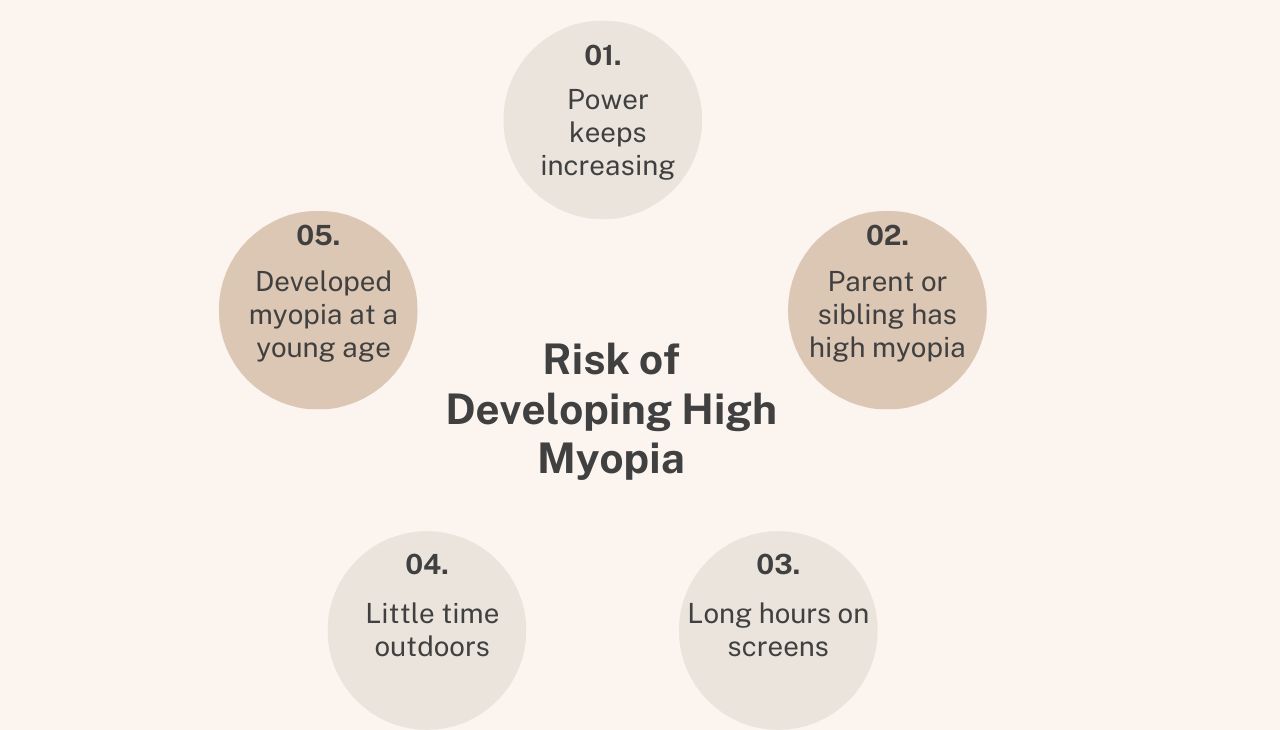
- Your power keeps increasing every year
- A parent or sibling has high myopia
- You spend long hours on screens or reading
- You spend little time outdoors
- You developed myopia at a young age
Children with early onset myopia are more likely to develop high myopia as adults.
Early Symptoms You Should Not Ignore
High myopia progression may be slow, but certain symptoms need immediate attention.
Watch out for:
- Sudden increase in floaters
- Flashes of light
- Distorted or wavy central vision
- Difficulty seeing in dim light
- A shadow or curtain blocking part of your vision
These signs may indicate retinal problems and require prompt treatment.
How to Prevent Myopia Progression
You cannot reverse myopia, but you can slow its progression.
Here are safe and proven ways to protect your eyesight:
Spend More Time Outdoors
Natural light helps control eye growth, especially in children.
Aim for at least two hours of outdoor time daily.
Follow the 20-20-20 Rule
Every 20 minutes, look at something 20 feet away for 20 seconds.
This reduces eye strain during screen use.
Limit Continuous Screen Time
Frequent breaks support healthy focusing habits.
Use Myopia Control Options
Your doctor may recommend:
- Low-dose atropine drops
- Orthokeratology lenses
- Special myopia control glasses
- Lifestyle adjustments
Keep Annual Eye Checkups
Regular checks help detect retinal changes early.
Consultation at Laxmi Eye Hospital
Laxmi Eye Hospital is one of the largest chains of eye hospitals in Mumbai with over 30 years of trusted eye care. It is known for expert doctors and transparent treatment practices. You receive complete eye care under one roof across services like Specs Removal or LASIK, Cataract, Glaucoma, Diabetic Eye Care, Cornea Clinic services, Retina Treatment, and Pediatric Ophthalmology.
Laxmi Eye Institute also runs one of the longest-standing cataract surgical training programs, including SICS and Phacoemulsification. The hospital has been training ophthalmologists in specialty fellowships for more than 25 years.
You can visit Laxmi Eye Hospital at any of their centres across Mumbai and Navi Mumbai. They have dedicated clinics in Dombivli, Kharghar, Panvel, and Kamothe, making it easy for patients to access quality eye care close to home. Each centre offers comprehensive services and expert consultations for all major eye conditions.
To book your appointment, visit the nearest branch or call the hospital desk for scheduling.
FAQs About Myopia and Eye Health
1. Can high myopia be cured?
No, high myopia cannot be reversed. But its progression can be controlled with proper treatment and monitoring.
2. Is LASIK safe for people with high myopia?
Your eligibility depends on your corneal thickness, power stability, and eye health. A detailed LASIK evaluation is required.
3. Does myopia always keep increasing?
Not always. It usually stabilizes in adulthood. Early monitoring helps keep the progression under control.
4. Are children more likely to develop high myopia?
Yes. Children who develop myopia early are at higher risk for high myopia later.
5. Can high myopia cause permanent vision loss?
Complications like retinal detachment or macular degeneration can lead to permanent vision loss if untreated.
Final Words
High myopia needs attention because of the long-term risks it carries. Understanding the symptoms and getting regular eye checkups helps protect your vision. If you have increasing power, discomfort, or concerns about eye health, seeking professional care can make a significant difference.
You can book a consultation at Laxmi Eye Hospital to explore safe and advanced treatment options tailored to your needs.