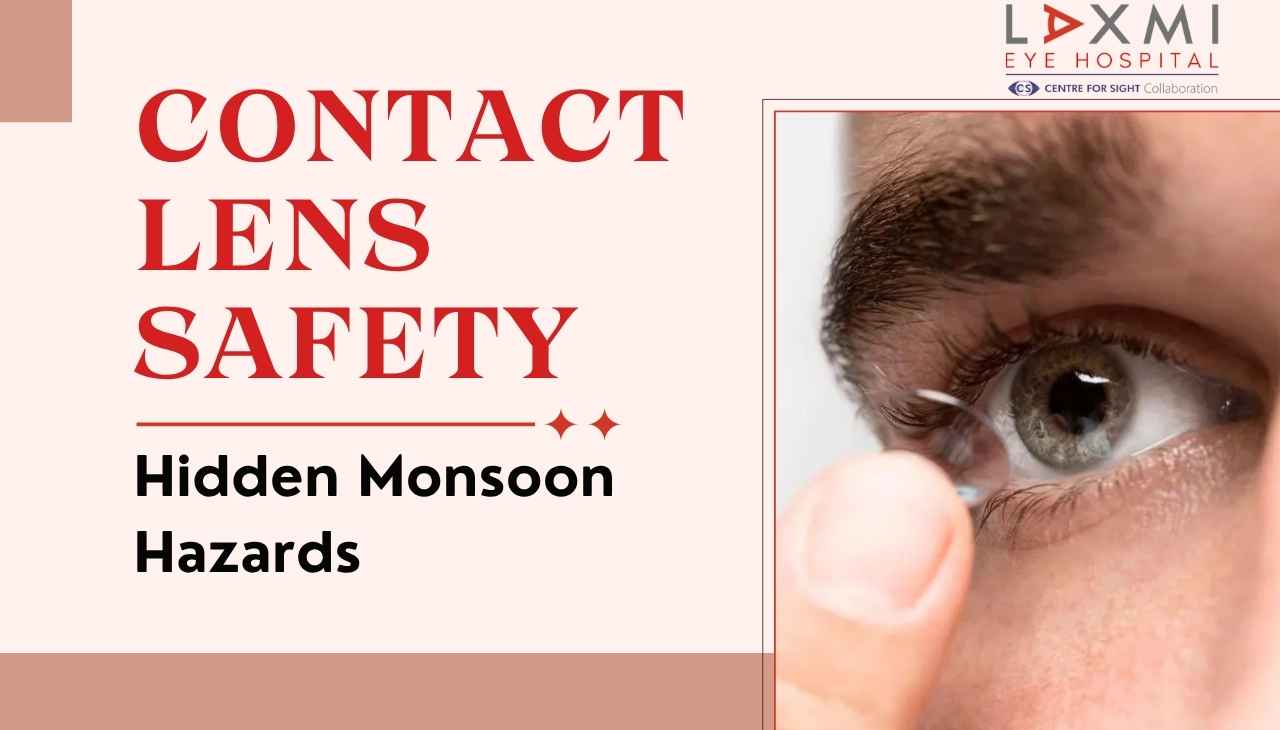
Contact Lens Safety in Monsoon
You are heading to work, the sky suddenly turns dark, and within minutes you are caught in heavy rain. If you wear contact lenses, that quick monsoon shower can create more than just inconvenience.
Rainwater, humidity, and poor lens care habits can increase the risk of eye infections and discomfort. Many contact lens users do not realize that monsoon requires extra attention to lens hygiene and eye protection.
This guide explains the hidden monsoon risks of contact lens use, safer practices to follow, warning signs that need medical attention, and expert tips to protect your vision during the rainy season.
Why Monsoon Can Be Risky for Contact Lens Users
Monsoon weather creates the perfect environment for microorganisms to grow. High humidity, frequent water exposure, and moisture around the eyes can increase the chances of contamination.
Your contact lens sits directly on the cornea, the clear front layer of your eye. When bacteria or other microorganisms get trapped between the lens and the eye surface, they can multiply quickly.
Some organisms, such as Acanthamoeba and Pseudomonas, are known to cause serious eye infections in contact lens users.
Acanthamoeba keratitis is a rare but severe infection that can damage the cornea and affect vision. It is often linked to contact with contaminated water while wearing lenses.
Your lens case can also become a hidden source of germs if it is not maintained properly. A warm, moist environment inside the case can allow microorganisms to survive and multiply.
This is why many eye specialists, including an experienced Ophthalmologist in Mumbai, advise patients to be extra careful with lens hygiene during the rainy season.
Hidden Monsoon Hazards That Contact Lens Users Often Ignore
1. Rainwater Exposure While Wearing Lenses
Getting caught in the rain may feel harmless, but rainwater is not suitable for contact lens exposure.
Rainwater can carry microorganisms, dust particles, and environmental pollutants. When it enters your eye, the lens can trap these contaminants against your cornea.
The risk becomes higher when:
- You rub your eyes after getting wet
- You continue wearing contaminated lenses
- You do not clean or replace the lenses properly
Daily disposable lens users may have an advantage because they can discard exposed lenses immediately. Still, they should avoid direct water contact whenever possible.
2. Contact Lens Cases Can Become Germ Reservoirs
Many people focus on cleaning their lenses but forget about the lens case.
A poorly maintained case can collect deposits and microorganisms over time.
Common mistakes include:
- Topping up old lens solution instead of replacing it
- Leaving the case wet after use
- Using the same case for too long
Your lens case needs the same attention as your lenses because it directly affects what comes in contact with your eyes.
3. Humidity and Increased Eye Discomfort
Monsoon humidity can affect tear evaporation and make some people experience dry, irritated eyes.
Contact lens users may notice:
- Scratchy feeling
- Burning sensation
- Lens discomfort
- Increased sensitivity
If your lenses feel uncomfortable during rainy weather, avoid forcing yourself to continue wearing them. Your eyes may need a break.
How to Protect Your Eyes While Wearing Contact Lenses During Monsoon
Carry a Monsoon Eye Care Kit
A little preparation can prevent many problems.
Keep these items handy:
- A clean pair of glasses
- Recommended lens solution
- Spare lens case
- Extra pair of daily disposable lenses if applicable
Having glasses as a backup is especially useful when travelling during unpredictable weather.
Follow Lens Replacement Schedules
Using lenses beyond their recommended duration can increase deposits and reduce oxygen reaching your eyes.
Do not extend the life of:
- Daily disposable lenses
- Weekly lenses
- Monthly lenses
Your replacement schedule depends on your lens type and eye condition.
Avoid Water Contact Completely
Never wear contact lenses while:
- Swimming
- Showering
- Washing your face with lenses on
- Playing outdoor water activities
Water exposure is one of the biggest avoidable risks for contact lens-related infections.
Contact Lenses and Eye Makeup During Monsoon
Rainy weather can create another challenge for people who wear makeup with contact lenses.
Waterproof mascara and eyeliner may resist rain, but they can still mix with moisture, sweat, and natural oils around your eyes.
Small particles from makeup products can move under the lens surface and cause irritation.
Follow safer habits:
- Put contact lenses before applying makeup
- Remove lenses before removing makeup
- Avoid applying eyeliner too close to the inner eyelid
- Replace old eye makeup products regularly
If you experience repeated irritation after using makeup with lenses, discuss it with an eye specialist.
At Laxmi Eye Clinic, patients are guided on safe lens practices based on their eye health, lifestyle, and vision needs.
When Should You Stop Wearing Contact Lenses?
Not every discomfort is an emergency. Mild dryness may improve after removing your lenses and resting your eyes.
Some symptoms require quick attention.
Seek professional advice if you experience:
- Sudden blurred vision
- Severe eye pain
- Increasing redness
- Sensitivity to light
- A white spot on the cornea
- Unusual discharge from the eye
A serious infection can progress quickly. Early evaluation helps prevent complications and protects your vision.
Are Daily Disposable Lenses Better During Monsoon?
Many people ask whether switching to daily disposable lenses during monsoon is safer.
Daily disposables reduce the need for cleaning and storage because you use a fresh lens every day. This may lower contamination risks compared with reusable lenses.
Still, daily lenses do not make you completely protected from infections.
You must still avoid water exposure and follow proper handling practices.
The right lens choice depends on your eye condition, wearing habits, and advice from your eye care professional.
FAQs
Can I wear contact lenses in the rain?
It is better to avoid exposing contact lenses to rainwater. If rain enters your eyes while wearing lenses, remove them if possible and follow proper cleaning or replacement instructions.
Are daily disposable contact lenses safer during monsoon?
Daily disposable lenses can reduce contamination risks because there is no storage between uses. But they still require careful handling and should not come in contact with water.
Can I wash my contact lenses with bottled water?
No. Bottled water is not designed for cleaning contact lenses. Always use a lens solution recommended by your eye specialist.
Why do my contact lenses feel uncomfortable during monsoon?
Higher humidity, dryness, environmental exposure, or lens deposits can cause discomfort. If symptoms continue, get your eyes checked.
Can contact lens infections affect vision permanently?
Some infections, such as severe keratitis, can affect the cornea and may impact vision if not treated quickly.
Should I switch from contact lenses to glasses during heavy rain?
Using glasses during heavy rain can be more convenient and reduces direct water exposure. Many users keep glasses as a backup option during monsoon travel.
How often should I get my eyes checked if I wear contact lenses?
Regular eye examinations help ensure your lenses fit correctly and your eyes remain healthy. Your eye specialist can suggest the right follow-up schedule.
Conclusion
Contact lenses offer freedom and convenience, but monsoon conditions require extra care. Rainwater exposure, contaminated lens cases, and poor hygiene can increase the risk of eye infections. Simple steps like carrying backup glasses, avoiding water contact, and recognising warning signs can help protect your eyes.
If you notice discomfort, redness, or changes in vision, consult an eye care professional instead of ignoring the symptoms. With the right precautions and regular guidance from specialists, you can continue enjoying clear vision while keeping your eyes healthy during the rainy season.