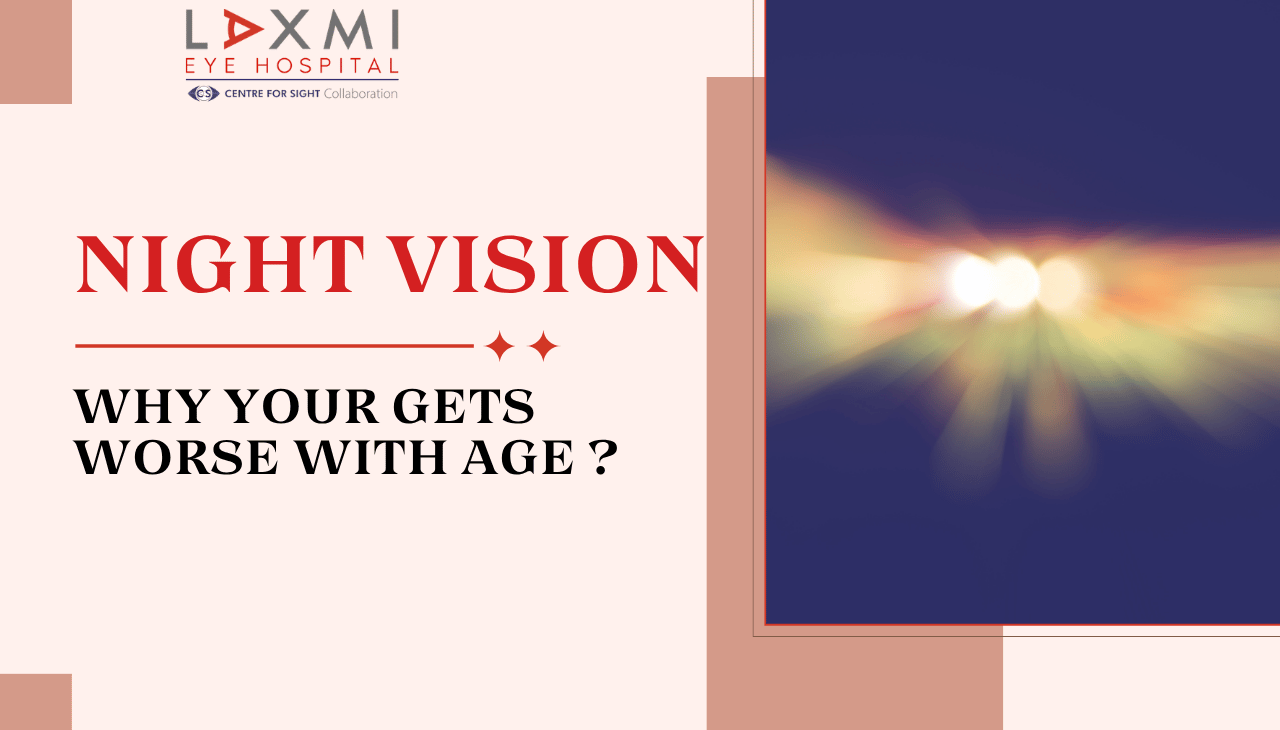
Night Vision Gets Worse with Age
Night driving often feels different as you get older.
Streetlights appear less sharp. Headlights create more glare. Road details take longer to register.
These changes are common and usually gradual. Many people first notice them after 40, especially during long night drives or on poorly lit roads.
Your eyes change with age, and those changes directly affect how safely you drive at night.
This blog explains why night vision reduces over time, what symptoms you should watch for, and how you can improve driving safety with practical steps. You will also understand when an eye check becomes necessary and where expert care can help.
1. What actually changes in night vision with age
Night vision depends on how well your eyes handle low light. Inside the retina, rod cells help you see in darkness. These cells slowly lose sensitivity with age.
At the same time, your pupil becomes smaller. Less light enters the eye. The eye lens also becomes less flexible, reducing clarity in dim conditions.
You may feel:
- Slower adjustment when moving from light to dark
- Reduced contrast on roads
- Increased sensitivity to headlights
These changes are gradual, but they directly affect driving confidence at night.
If you notice these signs early, an eye exam with an Ophthalmologist in Mumbai can help identify the exact cause before it affects your driving routine.
2. Why night driving becomes difficult on real roads
Night vision problems are not just about the eyes. Road conditions make it worse.
Modern LED headlights are brighter than older lights. They create stronger glare, especially on highways. Wet roads reflect light and reduce contrast further. Even small scratches on your windshield scatter light and increase halos.
This is why you may feel:
- Headlights stay in your vision longer
- Road edges look unclear
- Distance judgment becomes harder
These effects are more noticeable in city traffic and highway driving. Many patients who visit Laxmi Eye clinic report that night driving difficulty was their first warning sign of an underlying vision change.
3. Common eye conditions behind poor night vision
Age-related changes are one factor. But specific eye conditions often make night vision worse.
Cataract
This is the most common cause. The lens becomes cloudy. Light gets scattered instead of passing clearly. Night glare becomes strong.
Dry eye
Low tear film stability causes fluctuating vision. Night driving becomes uncomfortable due to increased light sensitivity.
Refractive error
Even a small change in spectacle power can reduce clarity at night. Many people do not update glasses on time.
Glaucoma
Peripheral vision reduces slowly. You may not notice side objects clearly while driving.
Vitamin and metabolic issues
Low vitamin A levels or uncontrolled diabetes can affect retinal function.
If night vision changes suddenly or feels uneven, it is important to consult an Ophthalmologist in Mumbai for proper diagnosis instead of assuming it is normal aging.
4. Warning signs you should not ignore while driving
Night vision issues often show up only during driving. You may not notice them during the day.
Watch for these signs:
- Headlight glare feels stronger than before
- You slow down more at night without a clear reason
- Road signs appear late
- You avoid night driving gradually
- You feel eye strain after short drives
If these signs repeat, do not ignore them. A detailed eye check at Laxmi Eye clinic or with a specialist can help detect early changes like cataract or refractive shifts.
5. Practical ways to improve night driving safety
You can improve safety with simple habits.
Update your eye prescription
Old glasses reduce clarity in low light. Even small power changes matter at night.
Reduce glare inside the car
Keep dashboard lights low. Clean the windshield regularly.
Adjust driving behavior
Avoid looking directly into headlights. Shift your gaze slightly to the road edge.
Take breaks on long drives
Short breaks reduce eye fatigue and improve focus.
Manage dry eyes
Blink more often. Use lubricating drops only if prescribed.
Improve contrast awareness
Avoid driving at very high speed in poorly lit areas where contrast is low.
These steps reduce strain and help you stay confident during night driving.
6. When night vision loss needs medical attention
Not all night vision changes are normal aging. Some signs need evaluation:
- Sudden increase in glare sensitivity
- Rapid worsening over weeks or months
- Halos around lights
- Frequent difficulty even with glasses
- One eye worse than the other
These symptoms often indicate cataract or other treatable eye conditions. Early diagnosis helps prevent further vision decline and improves driving safety.
A consultation with an Ophthalmologist in Mumbai ensures proper evaluation and treatment planning based on your condition.
FAQs
1. Is night vision loss normal after 40?
Yes, mild changes are common. But strong glare or sudden difficulty needs evaluation.
2. Can cataract affect night driving first?
Yes. Many patients notice night glare before daytime vision changes.
3. Will new glasses fix night vision problems?
They help if refractive error is the cause. Other conditions may still need treatment.
4. Why do headlights look blurry or spread out?
This usually happens due to lens changes, dry eyes, or early cataract.
5. Can I continue driving safely with poor night vision?
It depends on severity. A proper eye check is important before continuing night driving.
Conclusion
Night vision naturally reduces with age due to changes in the lens, pupil size, and retinal response. Road conditions and lighting make these changes more noticeable during driving.
Simple steps like updating glasses, reducing glare, and improving driving habits can make night travel safer. But when symptoms increase or interfere with driving confidence, an eye examination becomes important.
Timely consultation with an Ophthalmologist in Mumbai helps identify the exact cause and prevents further vision problems. Early care supports safer driving and better visual comfort in everyday life.