Choosing the right vision correction procedure can change how you see the world every day. Many people compare LASIK and LASEK but still feel confused about which one suits their eyes better. Both procedures improve vision by reshaping the cornea, but the process, healing, and suitability differ. This blog explains these differences in a simple and practical way so you can make an informed decision. You will learn how each procedure works, who it is meant for, recovery expectations, long-term results, and how to choose the right option.
What Is LASIK Eye Surgery?
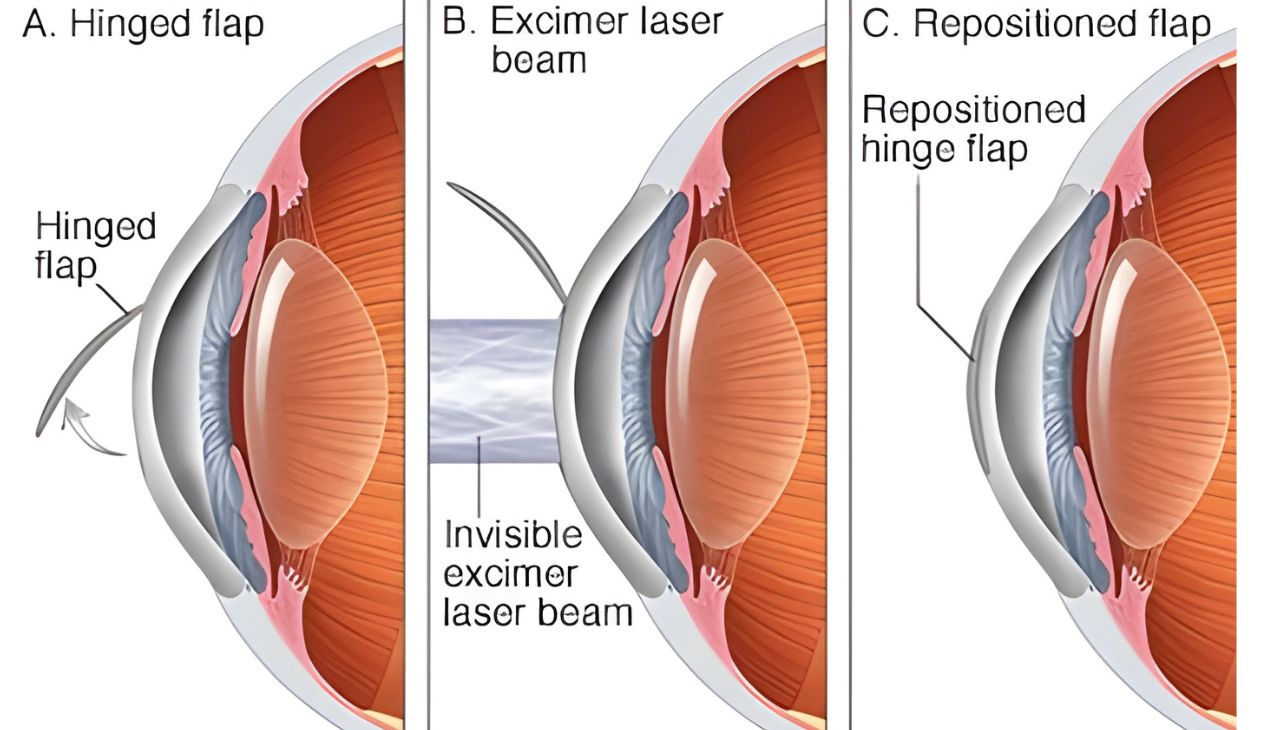
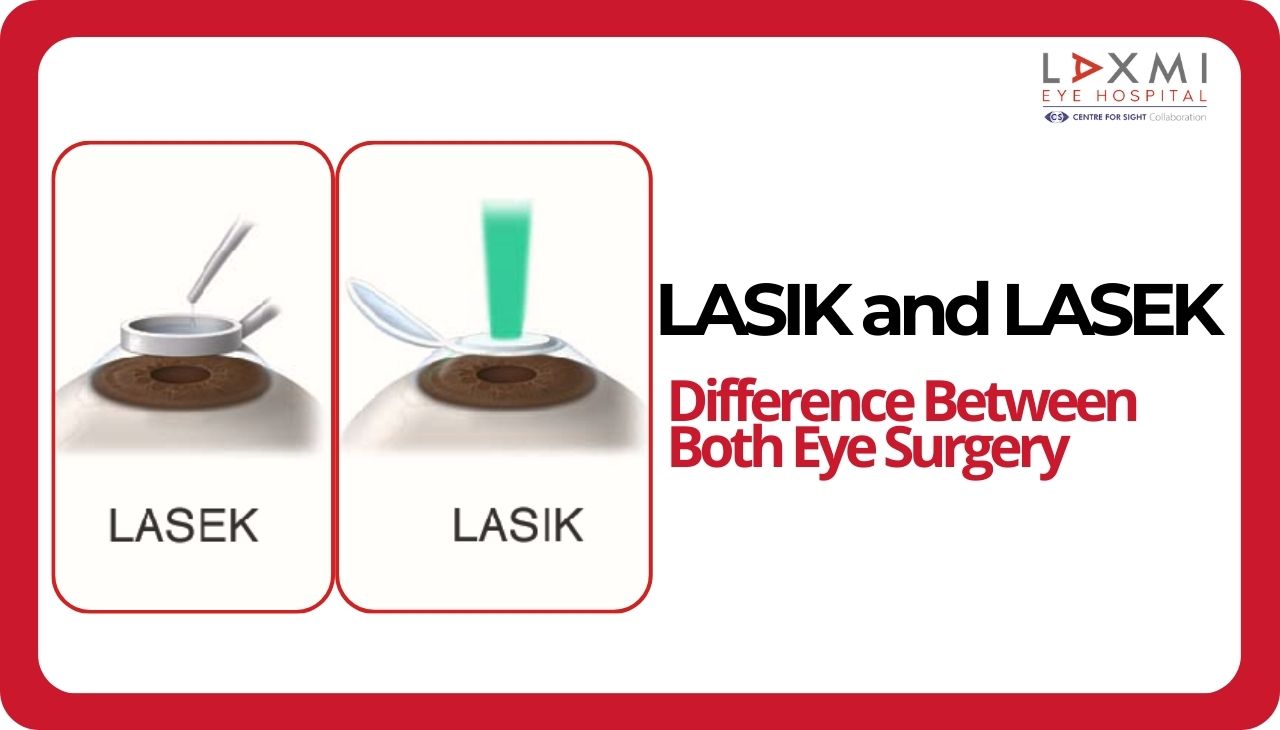
LASIK is one of the most common vision correction procedures. It reshapes the cornea to help light focus correctly on the retina. LASIK uses a flap-based technique. A thin flap is created on the cornea, lifted, and the laser reshapes the tissue underneath. The flap is then placed back, allowing quick recovery.
Key Features of LASIK
- Uses a corneal flap
- Quick healing
- Minimal discomfort
- Best for people with moderate corneal thickness
Benefits
- Clear vision within 24 hours
- Stable long-term results
- Suitable for most refractive errors
LASIK works well for people who want a fast, comfortable vision correction method with minimal downtime.
What Is LASEK Eye Surgery?
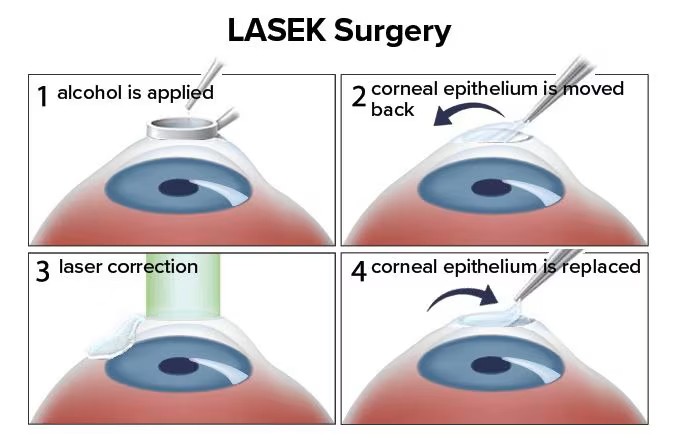
LASEK is a surface-based vision correction method. Instead of creating a corneal flap, the surgeon loosens the top layer of the cornea (epithelium), moves it aside, uses the laser to reshape the cornea, and then places the layer back. This makes LASEK suitable for people who cannot undergo LASIK due to thinner corneas or other medical factors.
Key Features of LASEK
- No corneal flap
- Longer healing time
- Less risk for individuals with thin corneas
- Suitable for athletes and people with risk of eye injury
Benefits
- Lower chances of flap-related complications
- Safe and effective for thin or irregular corneas
- More stable corneal structure in the long term
LASEK is often chosen for patients who need a safer alternative due to unique eye conditions.
LASIK vs LASEK: How Do They Differ?
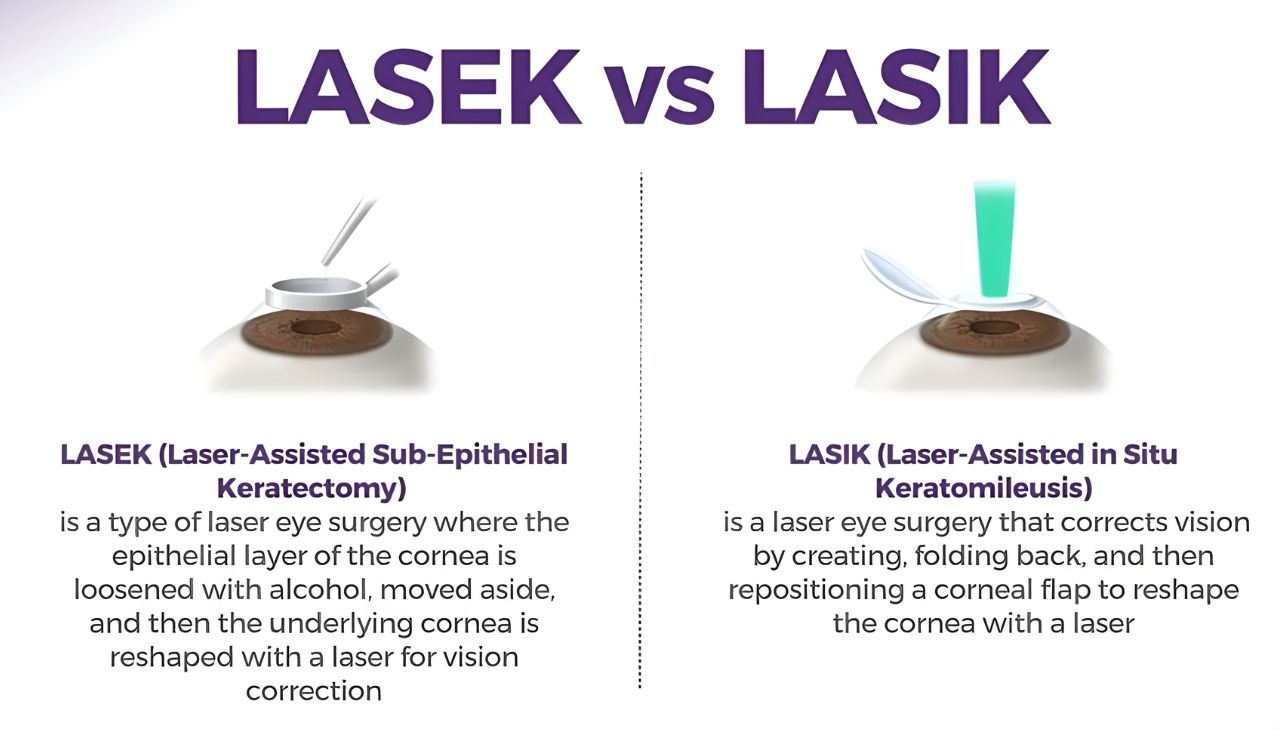
1. Procedure Approach
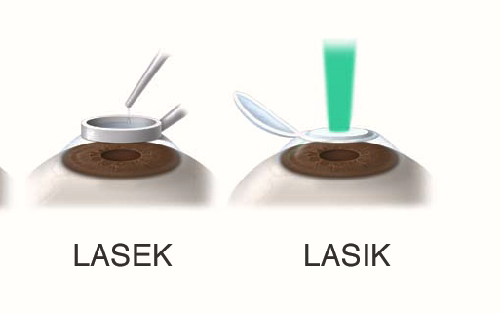
- LASIK: Creates a corneal flap
- LASEK: Involves loosening the epithelial layer
The main difference is how the surgeon accesses the corneal surface for reshaping.
2. Healing Process
- LASIK: Most people return to normal activities within a day
- LASEK: Healing may take several days to weeks
Since LASEK affects the surface layer, the recovery takes longer.
3. Pain and Discomfort
- LASIK: Minimal discomfort
- LASEK: Mild to moderate discomfort during the healing phase
Doctors often prescribe eye drops to keep the surface moist and comfortable.
4. Suitability Based on Corneal Thickness
- LASIK: Best for patients with normal or thick corneas
- LASEK: Recommended for thin corneas or irregular corneal shapes
If your corneas are thin, LASEK may be the safer option.
5. Risk of Flap Complications
- LASIK: Flap-related issues can occur in rare cases
- LASEK: No flap is created, removing this risk entirely
This is why athletes or people in high-impact professions often choose LASEK.
6. Visual Results
Both surgeries offer similar long-term visual results.
LASIK offers faster clarity, while LASEK provides results gradually.
7. Cost Differences
Costs may vary based on the technology and surgeon experience.
Both procedures are usually comparable in pricing, but LASIK may cost slightly more due to flap-creation technology.
Which Procedure Is Better for You?
Your suitability depends on:
- Corneal thickness
- Lifestyle
- Eye health history
- Accuracy of pre-operative evaluation
A detailed consultation helps determine the safest and most effective procedure. Never choose based only on online information. Each eye is unique, and your surgeon will guide you based on your complete eye examination.
Consultation at Laxmi Eye Hospital
Laxmi Eye Hospital is one of the largest and most trusted eye care chains in Mumbai. With more than 30 years of dedicated service, it has earned a strong reputation for vision care. The team is known for experienced doctors, advanced diagnostic technology, and transparent treatment guidance.
The hospital offers a wide range of services. These include Specs Removal and LASIK, Cataract Surgery, Glaucoma Care, Diabetic Eye Disease Management, Cornea Clinic Services, Retina Treatment, and Pediatric Ophthalmology. The hospital also runs one of the longest-standing cataract surgical training programs in SICS and Phacoemulsification. For more than 25 years, it has trained ophthalmologists through specialized fellowship programs.
You can book your consultation through the clinic reception or the hospital website.
FAQs
1. Is LASIK or LASEK safer?
Both are safe when performed by trained surgeons. The choice depends on your corneal thickness and eye health.
2. Which procedure has faster recovery?
LASIK provides quicker recovery. LASEK takes longer because the surface layer heals gradually.
3. Is LASEK painful?
You may feel some discomfort for a few days. Your doctor will prescribe drops to help with healing.
4. Can someone with thin corneas undergo LASIK?
Thin corneas often make LASIK unsuitable. LASEK may be a safer alternative.
5. Are the results of LASIK and LASEK permanent?
Yes, both offer long-term results. Your eye doctor will assess your vision stability before recommending the surgery.
Good eye care choices depend on clear, reliable information. Both LASIK and LASEK improve vision, but each suits different eye conditions. Understanding the differences helps you decide with confidence. If you want to explore which option fits your eyes and lifestyle, schedule a consultation with Laxmi Eye Hospital. A detailed evaluation will guide you toward the safest and most effective treatment.